20060722

Decision is in: Too many Georgian wines are fakes


When Russia slapped a ban on the import of wines from neighboring Georgia and Moldova, merchants in the smaller countries loudly protested.

Russia's health ministry said too many of the wines from their former partners in the defunct USSR were health hazards because of impurities and intentionally deceptive ingredients.

Turns out the Russians were correct, at least in the case of Georgia. The United Nations Food & Agricultural Organization (FAO) now says its tests show that 90% of Georgian wines sold abroad are counterfeit, and 80% of what Georgia exports is sold in Russian markets.

Back in May, Georgian President Mikheil Saakashvili served wine to his cabinet ministers -- "special" blends of several varieties of foreign counterfeits of Georgian wine. He was making the point to chastise government ministers for not assertively promoting Georgia's wine abroad, thereby allowing bogus brands to take a share of the market.

Police have been arresting sellers and purchasers of phony Georgian wines (as seen in the photo above), but the problem has broad reach in this area of Europe.

Georgia has a long winemaking tradition and for years had a good reputation in Europe, but the FAO says current practices range from alcoholic cocktails mixing spirits, colorings and flavors to wines bearing false appellations of origin.

Emmanuel Hidier, of the FAO Investment Center, said in a statement that the Georgian government had made some progress in crushing the fake wine market at home, but the situation had barely improved for wines sent abroad.

The FAO has been closely involved with Georgian wine since 2000, when the government asked it to help draft the country's first wine law. That law paved the way for Gerogia's first appellation of origin system, similar to those seen in other wine countries. Winemakers are required to reveal where they got their grapes and how they made their wine. A loophole used by counterfeiters takes advantage of the fact that no official documentation is needed to transport wine in bulk or in bottles within Georgia.

The FAO said it was now helping the Georgian government create a new oversight agency to improve implementation of the wine law.

To Dowd's Spirits Notebook latest entry.
To Dowd's Wine Notebook latest entry.
To Dowd's Brews Notebook latest entry.
Back to Dowd On Drinks

20060720

South Africa goes on a terroir


Simply saying a wine is from Australia, South Africa, Argentina, France or wherever doesn't satisfy the true wine lover. Such folks thrive on detail, such as terroir.

That's the characteristics of the dirt and the atmosphere and the topography of where a particular grape is grown, and what the better winemakers wrest from the soil.

The first South African Terroir Wine Awards gives recognition to the importance of such information.

Bon Courage Estate in Robertson, Steenberg Vineyards in Constantia and Bloemendal Estate in Durbanville made history at the first-ever SA terroir event.

Bon Courage entered two wines, and each won a national certificate emblematic of the best in class -- shiraz and fortified dessert wine, in this instance.

Steenberg also received two national certificates, the top red blend and the top merlot.

Bloemendal won only one best in class, the top sauvignon blanc, but it did double duty by receiving the highest score of all the wines entered.

Twelve wines originating from eight different winegrowing areas in South Africa's Cape winelands received national certificates. Only a certified "wine of origin" made from grapes from a specific ward (a smaller area within a district), estate or single vineyard qualified for the competition.

Its organizers say this type of competition is the first of its kind in South Africa and probably the first of its kind in the world.

The 2006 SA Terroir Wine Awards national certificates for the top wine of a specific cultivar were awarded to the Meerendal pinotage 2004 (Durbanville), Hartenberg cabernet sauvignon 2003 (Stellenbosch/Bottelary), Koelfontein chardonnay 2004 (Ceres), Hamilton Russell pinot noir 2004 (Walker Bay), Hildenbrand chenin blanc 2005 (Wellington), Bergsig touriga nacional 2005 (Breedekloof), Bloemendal sauvignon blanc 2005 (Durbanville), Steenberg merlot 2004 (Constantia) and Bon Courage shiraz inkara 2004 (Robertson).

The Steenberg Catharina 2003 (Constantia) received the national certificate for the top red blend, the Bon Courage white muscadel 2005 (Robertson) the national certificate for the top fortified dessert wine and the Lord Neethling weisser riesling noble late harvest 2005 (Stellenbosch, Neethlingshof) the national certificate for the top natural sweet wine.

Most entries were shiraz wines (24), followed by red blends (23), sauvignon blanc (20), pinotage (18), chardonnay (15), cabernet sauvignon (13), merlot (10), chenin blanc (7), fortified dessert wines (7) and natural sweet (4). Two Cap Classique, Colombar and touriga nacional wines were entered and one gewürztraminer, Cape riesling, pinot noir and white blend.

The three wines that received the highest average points were the Bloemendal sauvignon blanc, Avondrood sauvignon blanc 2006 (Goudini) and Steenberg merlot 2004.

To Dowd's Spirits Notebook latest entry.
To Dowd's Wine Notebook latest entry.
To Dowd's Brews Notebook latest entry.
Back to Dowd On Drinks

20060717

Rhode Island joins recorking movement


We recently reported on new laws approved in Maryland and Ohio to allow restaurant patrons to carry out unfinished portions of wine purchased by the bottle.

Add Rhode Island to the list.

Gov. Donald Carcieri has signed into law what statehouse denizens in Providence have been referring to as a "merlot-to-go" bill. It lets restaurants recork and seal unfinished bottles of wine. Supporters of the law say it should reduce drunken driving because people will no longer feel that they must finish a bottle of wine.

As in the 30 other states allowing such activity, the bottles need to be recorked and transported in an inaccessible area, such as a car's trunk or behind the last upright seat in a van.

20060715

Join Mr. Parker, for a mere $12.5G


When most people think of the Naples (FL) Winter Wine Festival, they think opulence. So, it should come as no surprise that an event noted for raising $40 million for charity since its inception in 2000 continues to think big.

The latest twist: a $12,500-a-ticket wine tasting session with Robert M. Parker Jr. (above), one of the world's most influential wine critics.

The festival, scheduled for next Jan. 26-28, already has lined up a list of celebrity chefs that includes Wolfgang Puck and Emeril Lagasse. The chefs are paired with various vintners to prepare meals at the homes of festival trustees.

Separate auction items for 2007 will include dinner with Martha Stewart in her New York and Maine homes, and a walk-on part in the ABC-TV show "Grey's Anatomy." Plus, a Rolls-Royce Phantom will be auctioned off.

The Parker event is ultra-ultra exclusive, limited to just 50 people for the Jan. 25 session. The $12,500 price will NOT include a ticket for the festival itself. That event, limited to 550 attendees, goes for $7,500 per couple or $20,000 for four people.

To Dowd's Spirits Notebook latest entry.
To Dowd's Wine Notebook latest entry.
To Dowd's Brews Notebook latest entry.
Back to Dowd On Drinks

20060712

Cornell names its latest offspring


The wait is over.

Meet Noiret, Corot noir and Valvin Muscat, New York's three newest wine grapes.

As I reported a few months ago, the new varieties come from the patient nurturing process at the New York State Agriculture Experiment Station run by Cornell University in the Finger Lakes village of Geneva. Prior to their public release, the varieties go under code names. After release, it is up to winemakers to decide whether they'll use the names in their labelling.

Bruce Reisch, a grape breeder and professor of horticultural sciences at Cornell, said the newly-named grapes developed by Cornell are broadly adapted to the wine-growing regions of the East and produce high-quality varietal wines superior to those now being produced.

The grapes were released at the 31st annual American Society for Enology and Viticulture/Eastern Section Conference and Symposium, held July 9-11 in Rochester, N.Y.

• Noiret (nwahr-ay) is a mid-season red wine grape. It is a hybrid made in a 1973 cross between NY65.0467.08 and Steuben.

• Corot noir is a mid- to late-season red wine grape, It is a complex interspecific hybrid resulting from a 1970 cross between Seyve Villard 18-307 and Steuben.

"Both Noiret and Corot noir represent distinct improvements in the red wine varietal options available to cold-climate grape growers," Reisch said. "Wines are free of the hybrid aromas typical of many other red hybrid grapes." Noiret is richly colored and has notes of green and black pepper, with raspberry and mint aromas and a fine tannin structure, he said. Care should be taken to grow Noiret on sites less susceptible to extreme winter temperatures and downy mildew."

• Valvin Muscat is a mid-season white wine grape with a distinctive muscat flavor and aroma that is desirable for blending as well as for varietal wines. The complex interspecific hybrid grape resulted from a 1962 cross between Couderc 299-35 (an interspecific hybrid known as Muscat du Moulin) and Muscat Ottonel.

"Valvin Muscat is recommended for the production of high-quality muscat wines," Reisch said. "Vines are well suited to good grape-growing sites in the eastern United States, and should only be grown on suitable rootstocks." Some care should be exercised to control disease, and fruit should be picked when the muscat flavor reaches its peak, he noted.

Click here for my pre-release tasting notes.

With the new varieties, whose names are trademarked, the Experiment Station now has nine wine grapes to its credit. The previous Cornell releases are: Melody, Horizon, Cayuga White, Chardonel, Traminette and GR 7.

To Dowd's Spirits Notebook latest entry.
To Dowd's Wine Notebook latest entry.
To Dowd's Brews Notebook latest entry.
Back to Dowd On Drinks

20060711

A guide to the guides


There are lots of wine magazines with lots of tasting notes and lots of "best of" ratings.

How do you know which truly are good consumer guides?

That's something the former editor of Wine Enthusiast magazine wondered, so he put together a guide to the guides that makes for good reading.

As W.R. Tish (seen here) notes, "It doesn't take a fly on the wall at editorial tastings to see important differences among the major glossy magazines, as well as the extent to which their burgeoning wine review sections are as much marketing guides for the trade as they are buying guides for consumers."

To Dowd's Spirits Notebook latest entry.
To Dowd's Wine Notebook latest entry.
To Dowd's Brews Notebook latest entry.
Back to Dowd On Drinks

20060705

Maryland, Ohio: Put a cork in it


On July 1, Maryland joined about 30 other states that allow restaurant diners to take home unfinished bottles of wine. In late September, Ohio will join the crowd.

Such bottles still are considered "open containers" and can be transported only in a locked glove compartment, cargo area or trunk of a vehicle.

"We believe that this new law will encourage more customers to purchase wine by the bottle while simultaneously encouraging responsible drinking," said Melvin Thompson, vice president of government relations for the Restaurant Association of Maryland, in a statement. "Re-corking gives the customer the choice of finishing the wine at home instead of being forced to drink it or lose it."

Will this really matter to restaurateurs?

I checked with Jerry Pellegrino, owner/chef of Corks in Baltimore, a wine-centric establishment that deals exclusively in domestic wines, many of which Pellegrino ferrets out in his travels around the country.

"We offer our guests so many alternatives to ordering an entire bottle of wine that I'm not sure the law will help our wine sales, what proponents of the legislation claim," Pellegrino said.

Some restaurateurs were concerned that because it is less expensive to buy a bottle of wine than buying it by the glass, the sales of by-the-glass wines might drop off. However, others note that people who purchase by-the-glass usually do so to either limit consumption or to try something new without a commitment to an entire bottle.

"We're offering over 40 half-bottles and each one of those can be ordered by the glass," Pellegrino told me. "And, we're not talking wines that are the normal suspects. We have things like Foley Charbono, Martinelli 'Guiseppe and Louisa' zinfandel, a vertical of Corison 'Napa' cab and Paul Hobbs 'Dinner Vineyard' chardonnay available. So, if you don't want to order another full bottle at Corks, you don't have to."

Brian Fiori, general manager of Morton's steakhouse in the Sheraton hotel at Baltimore's Inner Harbor, said recorking could be an advantage for solo diners.

"We have a lot of single diners from the hotel," he said, who like to have fine wine with their meals. He told the Sun newspaper the recorking rules will allow these diners to pick a bottle of wine from the part of the restaurant's wine list that offers the widest selection, then bring the leftovers to their room.

A few other Pellegrino observations:

"The law may benefit properties that don't offer an aggressive wine by the glass program or where wine isn't a priority and guests may want another bottle for the table. But I think, going back to the big picture, the law sets a tone about how we view wine in Maryland. We're saying that it's OK to take a bottle home in your car. If you're a wine drinker, you're responsible enough to drive around with it and not gulp it out of the bottle on the highway.

"Maybe it's not something that we should regulate so tightly. Under-age children aren't going to start ordering it on the Internet and have it shipped to their home, and so on. So, financially it's not going to be that beneficial to restaurateurs, but in our quest to deregulate how wine is purchased and distributed I think it's a big win."

In Ohio, where Gov. Bob Taft signed a bill on June 20 that will allow restaurant customers to take home their unfinished bottles, the 90-day countdown to implementation is under way.

Said Walt Wirth, a managing partner in the distributing company 55 Degrees, "The biggest losers will be the servers or managers who got to finish those partially empty bottles of wine."

To Dowd's Spirits Notebook latest entry.
To Dowd's Wine Notebook latest entry.
To Dowd's Brews Notebook latest entry.
Back to Dowd On Drinks

20060703

Chirac's Parisian wine collection to be sold


Jacques Chirac did a lot more than run Paris during two decades as its flamboyant mayor before he went on to become premier of France.

Among other things, he collected 5,000 bottles of wine, a stash the city now wants to sell off.

The majority of the cellar's 5,000 most prestigious bottles, including several 1990 Château Pétrus, worth more than $1,800 each, are scheduled to be sold this fall. Bertrand Delanoë, the current mayor, said he expects the sale, which includes 191 bottles of 1976 Krug champagne, to raise about $700,000.

During his time as mayor of Paris, from 1977 to 1995, Chirac and his wife, Bernadette, were known for their penchant for food and wine on which they are said to have spent $2.7 million of taxpayers' money between 1987 and 1995 alone. Delanoë, who became mayor in 2001, has cut the wine and champagne budget by 65 per cent.

To Dowd's Spirits Notebook latest entry.
To Dowd's Wine Notebook latest entry.
To Dowd's Brews Notebook latest entry.
Back to Dowd On Drinks

20060629

Arizona toasts a new era


Arizona seems to be having a wine-fueled love fest.

After grape growers, winemakes, wholesalers and retailers reached a compromise on what sort of new legislation would benefit all parties, the state legislature and governor quickly got on board.

The result: a new law will protect growers' existing rights and help fledgling wineries.

Rod Keeling, president of the Arizona Wine Growers Association and owner of Keeling Schaefer Vineyards near the town of Willcox in rural Cochise County, said, "We made a compromise deal in an hour and a half, but it took us three days to hash out the language. The wholesalers and wineries wanted a smaller cap (for gallons produced by a winery per year) and we gave them that and got everything else we wanted.

"This is a really good bill for rural Arizona winegrowers," Keeling said in an interview with the Range News.

The bill signed into law by Gov. Janet Napolitano allows any U.S. growers producing less than 20,000 gallons per year to sell directly to Arizona consumers. Previously, Arizona wineries producing less than 75,000 gallons per year could sell directly to consumers, but wholesalers complained that too many wineries were allowed to bypass them.

The new law will also open the Arizona wine market to out-of-state wineries under 20,000 gallons per year.

To Dowd's Spirits Notebook latest entry.
To Dowd's Wine Notebook latest entry.
To Dowd's Brews Notebook latest entry.
Back to Dowd On Drinks

20060627

Wine tourism on the rise


• See event and contact information below.

Wine tourism has become commonplace now that every one of the United States has at least one winery, and most of them many more.

The majority of states have created wine trails to entice tourists to tour various vineyards and wineries. Pamphlets for self-guided tours are usually free and areas are marked with unique signage to keep motorists from wandering too far off course.

But certain wine-intensive areas in the U.S. and elsewhere are taking advantage of the global boom in wine consumption to push interest to a higher level by creating centers to educate and entertain the masses.

The New York Wine & Culinary Center project, for example, opened this month after a whirlwind 10-month construction schedule.

As the facility, located on the shores of Canandaigua Lake near Rochester, begins its opening programs, a similar facility is under way on the West Coast with a projected May '07 opening.

It's the Walter Clore Wine and Culinary Center, a $9.2 million project located in Prosser, Wash., in the Yakima Valley wine region.

The Washington facility's backers foresee it as both a destination for tourists and a place for winemakers to gather. It will have a 17,500 square-foot building, vineyards, organic gardens and a public park.

The main building will have a restaurant, exhibition galleries, a theater, a demonstration kitchen, wine bar and a retail shop.

The center's namesake is the late Walter Clore, regarded as the father of Washington wine. The state is the No. 2 producer of premium wine in the United States, trailing only California.

To the south, in California's storied Napa Valley, is the 10-year-old Copia against which all other wine-centric facilities are measured.

Neighbor to such commercially popular wineries as Robert Mondavi, Beringer, Stags Leap, Coppola, Domaine Chandon and Sterling, Copia and the nearby West Coast branch of the Culinary Institute of America have helped make the region an eating-and-drinking mecca that helped fuel the rebirth of Napa, the valley's anchor city of 53,000.

Copia's subtitle is "The American Center for Wine, Food & The Arts." It's a not-for-profit cultural center and museum that has been open to the public for about four years. It includes sprawling herb, flower and tree gardens (seen above), as well as several restaurants, museums and galleries in am 80,000-square-foot building on the banks of an oxbow bend in the Napa River.

"We're a non-collecting museum," said Daphne L. Derven, curator of food and assistant drector for programs. "That keeps us on our toes to continually come up with new ways to educate and entertain our visitors."

Two years ago, on the other end of New York state, Stony Brook University came up with a different model by establishing its Center for Wine, Food, and Culture.

The idea is to split its efforts between its main campus on Long Island and its facilities in Manhattan, offering wine- and food-tasting classes, cultural lectures, and interdisciplinary symposia.

The Canandaigua wine and culinary center is more of a destination place, like its California cousin Copia, although decidedly smaller.

While the exterior is on the plain side and the landscaping news and, therefore, undersized for now, the interior has an impressive upscale Adirondack-style design, utilizing multi-hued, handworked wood wainscoting, stair railings, display shelving and counters. A 36-station kitchen and views of the lake are other highlights of the roughly $7 million project.

Director Alexa Gifford said the final look will include entrance landscaping geared toward representations of indigenous plants from the region.

"We'll have local flowers and shrubs, grape vines and the like that will set the mood for visitors," she said. "Americans in general are used to pulling into a parking lot that leaves you right up to the door. We'll be guiding people along a path that creates a mood, and then they'll walk into this beautiful facility that will build on that atmosphere."

The 15,000 square-foot center will offer hands-on courses in culinary science; interactive exhibits on New York State agriculture, foods and wines; demonstration space; and a live garden outside of the building. And, it has a tasting room with a
rotating selection of wines from New York's major regions (Niagara/Lake Erie, Finger Lakes, Hudson Valley and Long Island), a wine and tapas bar for light meals and wine-and-food pairings, a theater-style demonstration kitchen, a training kitchen for hands-on cooking classes, and industrial kitchens for credited culinary classes and corporate training.

No wine is sold at the facility, but visitors can use a computer right there to order directly from New York wineries.

Planning your trip

Check out domestic possibilities on Dowd's Guide to American Wine Trails and U.S. and Canadian wine festivals at Dowd's Drinks Events Calendar.

Both sites offer live links to recognized trails and events information nationwide.
To check out events and schedules at various wine and culinary centers, call or go online:

• Copia: The American Center for Wine, Food & The Arts
500 First St., Napa, Calif. 94559.
Details: Online or by phone at (888) 512-6742.

• New York Wine & Culinary Center
800 South Main St., Canandaigua, N.Y. 14424.
Details: Online or by phone at (585) 394-7070.

• Stony Brook University
Center for Wine, Food & Culture, Stony Brook, N.Y. 11794.
Details: Online or by phone at 631) 632-6000.

To Dowd's Spirits Notebook latest entry.
To Dowd's Wine Notebook latest entry.
To Dowd's Brews Notebook latest entry.
Back to Dowd On Drinks

20060623

Fruit wine niche is broadening


Some years ago, I was tromping through the fields at the Eden Vineyards and Winery in Alva, a little burg east of Fort Myers, Fla., and about an hour’s drive south of Tampa.

I was there to look over the modest operation for several reasons. It was the state’s oldest winery, the southernmost winery and vineyard in the continental United States, and it purported to be the only commercial winery using carambola, more popularly known as star fruit.

Fast forward to today. Eden now holds only one of those distinctions. It still is Florida’s oldest operating winery.

The emergence of Schnebly Redland's Winery has taken away the geographic title. It’s located in Homestead, down near Miami. And it, along with Eden and several other producers, makes carambola wine.

Schnebly Redland, owned by the husband-wife partners Peter and Denise Schnebly, is part of a growing niche in the American winemaking industry using more than grapes, or avoiding them altogether.

The Schneblys, for example, produce five grape-free varieties of tropical fruit wines: carambola, mango, lychee, guava and passion fruit. They range in price from $13.95 to $18.95. The winery ships orders to all states except Massachusetts, New Jersey, New Hampshire and Utah.

For a long time, non-grape wines were primarily the province of the home winemaker. For one thing, it is easier to get good berries and fruits than it is to get wine-quality grapes. For another, aging rarely is necessary to ensure a good non-grape wine.

In judging various wine competitions around the country, I’ve noticed an uptick in recent years in non-grape wines its producers feel are of medal quality. Most have been in the port (blueberry, blackberry) and ice wine (peach, cherry) categories, but the range is broadening.

Sometimes the decision to go into non-grape wines has been the result of an established winery looking for new products to sell. In other instances, it has been a matter of economic survival.

A good example of that is Goold Orchards in rural upstate Rensselaer County, N.Y. The Goold family began selling apples there nearly a century ago, and Sue Goold Miller and her husband, Ed Miller, have used almost every trick in the book to keep their business healthy – selling cider, pies, pumpkins, holding breakfasts, craft shows, school tours, even sponsoring a 5-kilometer run on their grounds.

Now, they’re established the Brookview Station label for a semi-dry apple wine. They're giving it to friends and family while they await action on their bid to get state permission to become a farm winery.

Others fruit farms in New York have done the same thing. Warwick Valley Winery in Orange County, 70 miles from midtown Manhattan, makes hard cider and apple port. The Winery at Marjim Manor in Niagara County in the western part of the state has a variety of fruit wines such as apples, pears, cranberries and plums.

Grapes are delicate creatures, thus the use of other fruits in winemaking adds to the business potential for business people in more rugged climes.

North Rivery Winery in Jacksonville, Vt., for example, has carved out a solid place in the non-grape world.

There, rhubarb, raspberry, apple, and pear wines are made. Proprietors Curt and Wendy Barr have done so well since opening in 1985 that they expanded to a second facility, opening the Ottauquechee Valley Winery in nearby Quechee.

At the Three Lakes Winery in the Wisconsin north woods, several generations of the McCain family have parlayed what once was a hobby when they lived in Palo Alto, Calif., into a serious commercial wine business.

It was in California that John and Maureen McCain began using fruit from several of the Japanese plum trees in their front yard, and that led to using other fruits and berries, which in turn led to establishing their winery in an area where John had long vacationed.

Not every fruit winery is located out in the country, of course.

Ferrin's Fruit Winery, in Carmel, Ind., is a scant 20 minutes from downtown Indianapolis. There, David and MaryAnn Ferrin do offer three wines they make, but the bulk of what they produce comes from pears, apples, cherries, cranberries, plums, raspberries and blueberries.

Given that there is at least one winery in every state, it's a safe bet to predict bothing but growth in the non-grape wine industry as more and more people try to make a financial go of it.

To Dowd's Spirits Notebook latest entry.
To Dowd's Wine Notebook latest entry.
To Dowd's Brews Notebook latest entry.
Back to Dowd's Bar Blog

20060618

Portugese grape crops destroyed


Get ready to pay higher prices for authentic port wine from Portugal.

Severe storms this week destroyed more than 4,200 acres of grapes in northern Portugal, according to the country's Agriculture Ministry. That leaves about 11,500 acres of grape production. Hail also fell in June last year, causing damage to hundreds of acres.

Heavy rain hit the country from Tuesday, causing floods and damage from north to the south of the country and injuring 16 in the northern town of Famalicao.

Agriculture Minister Jaime Silva said hailstones "the size of quail eggs" fell on crops on Wednesday in Alijo, Sao Joao da Pesqueira, Tabuaco and Sabrosa, four of the most important port-producing regions.

Several local officials, however, have said that up to 80 percent of the port wine crops in their districts was lost in the storms.

Portugal sold 24.7 million gallons of port wine last year, according to the Port and Douro Wines Institute (PDWI).

To Dowd's Spirits Notebook latest entry.
To Dowd's Wine Notebook latest entry.
To Dowd's Brews Notebook latest entry.
Back to Dowd's Bar Blog

20060616

Berger lands a new perch

Dan Berger, the California wine writer who ranks among the upper echelons of our craft, is joining Appellation America as editor-at-large for the Internet-based wine portal.

Berger will concentrate on the emergence and redefinition of appellations and the importance of terroir in North America.

The full story is here.

20060614

'Wine can't be an antique, can it?'

That's the question the lady asked of Elmer P. Thinkwhile.

You might enjoy his answer. Especially if you're curious about wine collecting.

The noted antiques dealer's ruminations on vintage wines are available here on Wayne Mattox's "Antique Talk" Web site,

20060608

Europe's wine woes getting worse


Too much of a good thing can be a problem. Just ask Europe's wine producers.

Wines from the "New World" have become such a consumer favorite in the United Kingdom that drastic measures are being taken.

As reported by The Times of London, "The unquenchable desire of Britons for New World wines has forced Brussels to order nearly a billion bottles of French and Italian wine to be turned into fuel and disinfectant. The European Commission will then spend US$3.03 billion digging up vineyards across the continent.

"The drastic measures to drain Europe’s swelling wine lake come as winemakers across the Continent face a seemingly unstoppable invasion of cheaper and more consistent wines from Australia, Chile, the US and South Africa. Wine critics say it is an inevitable result of French wine producers not adapting to demand."

(Read the full story here.)

Meanwhile, this report from New Zealand deals with the Australian wine glut that is forcing prices of Aussie wines down and affecting other markets:

A flood of cheap Australian wine and intense retail competition mean it is a great time to buy wine but not such a good time to be selling it. Some New Zealand winemakers say Australia's glut is dragging prices down in local and export markets.

"We are definitely feeling an impact from the wine glut – not only in New Zealand, but we are seeing quite a profound effect in the UK market," said Erica Crawford, general manager at Kim Crawford Wines. "Prices have just fallen through the bottom ... . We've noticed this in the last two quarters in the UK. It's so cheap from Australia other countries don't get a look in."

(Read that story here.)

To Dowd's Spirits Notebook latest entry.
To Dowd's Wine Notebook latest entry.
To Dowd's Brews Notebook latest entry.
Back to Dowd's Bar Blog

20060607

Let it breath, heavily


The last time I reported on Natalie Oliveros, the porn star/promoter was talking up her Savanna Sogo Uno red wine.

Oliveros, 31, the expatriate New Yorker who is known to her fans as adult video actress Savanna Samson ("The New Devil in Miss Jones") had received a score of 90-91 out of 100 from wine guru Robert Parker for her Italian red.

Now comes word the entrepreneurial Ms. Oliveros will be stripping off the veil from her white blend, a performance scheduled for Wednesday, June 14, in conjunction with the premire in New York of the HBO porn documentary "Thinking XXX," at the Hotel On Rivington.

To Dowd's Spirits Notebook latest entry.
To Dowd's Wine Notebook latest entry.
To Dowd's Brews Notebook latest entry.
Back to Dowd's Bar Blog

20060605

Sip transit glorious Finger Lakes


One of the problems with the rapidly expanding number of wineries in New York's Finger Lakes is tourism.

Not that the area doesn't want visitors. Just the opposite. Trouble is, too many of them are potentially dangerous drivers as they move from winery to winery, tasting their wares.

Some enterprising types have been offering a combination of a rental car complete with driver, and even a linkup to a bed-and-breakfast with that service. However, that doesn't do much for the many boaters who pull up to shore and want to visit more tha one winery but have no wheels.

Thus, the Seneca County Chamber of Commerce has begun offering weekend bus tours to local wineries -- four wineries on the west side of Cayuga Lake on Saturday, and four on the west side of Seneca Lake on Sunday.

"The wine tour was in response to boaters coming in not being able to get a limousine or a rental car because they were booked up for the weekend. So they were stuck in the harbor," said Dominic Christopher, the Chamber's executive director. "We're ready for big groups anytime."

Traffic is particularly heavy during the summer months when boaters show up at the state's canal system harbor in Seneca Falls. For $25, they now can take the bus right at the harbor. Of course, the weekend tours, which began June 3 and will run through Oct. 8, aren't limited to boaters. They're available to anyone on a space-available basis.

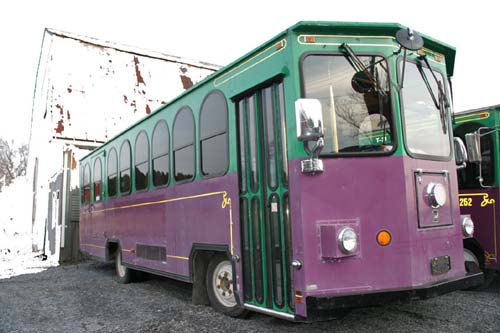
Meanwhile, a trackless Wine Tour Trolley will also be offering a similar service for visitors in the Geneva area starting Saturday, June 10.

Mike Fitzgerald, who owns a limousine and private tour coach service, bought the trolley which had been used in tourism businesses in New Orleans and Buffalo. Tours on the 26-seat vehicle will cover five wineries in a six-hour period through Dec. 2 at $45 per person.

To Dowd's Spirits Notebook latest entry.
To Dowd's Wine Notebook latest entry.
To Dowd's Brews Notebook latest entry.
Back to Dowd's Bar Blog

20060603

NY Wine Center sets opening day

The New York Wine & Culinary Center will open to the public on Saturday, June 17.

Executive Director Alexa Gifford calls the $7.5 million facility perched on the shore of Canandaigua Lake the "physical and electronic gateway to New York's food, wine and agriculture."

20060525

California vs. France redux


Thirty years on, California wines trounced Bordeaux wines in a rematch of a historic blind taste test credited with, in the words of one writer, reshaping the world of enology.

The original test was held in Paris. This time around, the Californias had the homecourt advantage in the competition held at COPIA: Center for Wine, Food and the Arts, in Napa, CA.

Napa Valley wines were judged best by the combined scores of two simultaneous panels, one in California and one in London. Judges at both venues gave top honors to a 1971 Ridge Monte Bello cabernet from the Santa Cruz Mountains.

"Maybe it is final justification that it held through all these years and did well," Paul Draper, Monte Bello's winemaker, said to the Associated Press. "I'm truly delighted. Ten years from now, all of us and all the wines will truly be faded and maybe we can lay this to rest."

The highest-ranked Bordeaux was a 1970 Chateau Mouton Rothschild, which placed sixth of 10 wines tasted in the anniversary recreation of the historic "Judgment of Paris." Bordeaux wines took sixth through ninth places Wednesday, with a 1969 Cabernet from Freemark Abbey finishing last.

The rematch of wines from the "Judgment of Paris," billed as the most famous wine tasting in history, was held simultaneously in the heart of California's premier wine country and at Britain's oldest wine and spirits merchant.

"It's just beautiful," said Christian Vanneque, who was a judge at the '76 Paris tasting and again Wednesday in Napa. "It shows that these California wines did win also the test of time."

Said Vanneque, who lives in Indonesia, to Agence France Presse. "I don't know if I will be able to go back to France. After a second time, they will kill me."

Ten judges sampled 10 unlabeled glasses of decades-old premium wines. Two of Vanneque's favorite blind wine picks were from Napa Valley.

"The one I thought was a Mouton was Clos du Val," he said. "The most surprising thing is they were all exceptional. I did not expect to have that much harmony among them all."

"There wasn't one wine that stood head and shoulders above the others," said taster Jean-Michel Valette, a master of wine at Robert Mondavi Winery in Napa. "These are all world class."

The May 24, 1976, tasting is considered a milestone in the American wine industry because it shattered the perception that the New World was capable only of producing cheap bulk wines. It was put together by Steven Spurrier, an English wine merchant who owned a shop and wine school in Paris. Spurrier, now a wine consultant, also was co-organizer of Wednesday's rematch.

The organizers noted that the judges re-evaluated the original reds, then tasted the modern reds and whites from both countries. For the most part, the judges were unable to distinguish the French and California wines.

Top French white was a Puligny-Montrachet Premier Cru des Pucelles 2002 Domaine Leflaive; for California it was a Talley Rosemary's Vineyard 2002. Top French red was a Chateau Margaux 2000 and the leading California red was a Ridge Monte Bello 2000 with 77 points.

To Dowd's Spirits Notebook latest entry.
To Dowd's Wine Notebook latest entry.
To Dowd's Brews Notebook latest entry.
Back to Dowd's Bar Blog

20060521

Sneak peek at Decanter wine awards


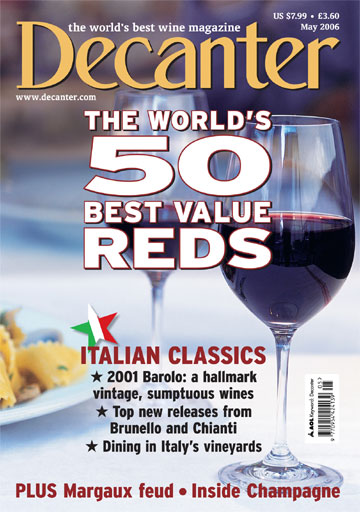
The results are in for the third annual international wine competition sponsored by Decanter, the prestigious British wine magazine.

The publisher will not reveal the full results until September, but I've obtained the gold medal list so you don't have to wonder for months.

• Katnook Estate Odyssey, Cabernet Sauvignon 2001, South Australia (Red) $50.

• Spier Vintage Selection Shiraz-Mourvedre-Viognier 2004, Australia Coastal Region (Red) $205.

• Auvigue Vieilles Vignes 2004 Bourgogne (White) $21.

• Bredon Brut NV Champagne (White) $21.

• Brown Brothers Patricia Cabernet Sauvignon 2002, Victoria (Red) $21.

• Charles Heidsieck Brut Millésimé 1989 Champagne (White) $145.

• Charles Heidsieck Brut Millésimé 1985 Champagne (White) $178.

• Comte Audoin de Dampierre Cuvée des Ambassadeurs NV Champagne (White) $39.

• Comte Audoin de Dampierre Cuvée Family Reserve 2000 Champagne (White) $99.

• D'Arenberg The Cadenzia, Grenache, Shiraz, Mourvedre 2004, South Australia (Red)$16.

• D'Arenberg The Laughing Magpie Shiraz Viognier 2004, South Australia (Red) $35.

• De Bortoli Show Liqueur Muscat NV, New South Wales (Red) $15.

• Dereszla Tokaji Imperium 2000 Tokaj-Hegyalja (White) $115.

• Domaine Christian Moreau Père et Fils Valmur 2004 Bourgogne (White) $55.

• Domaine Paul Blanck et Fils Riesling 2002 Alsace (White) $32.50.

• Domaines Schlumberger Gewurztraminer 2002 Alsace (White) $52.

• Duval-Leroy Blanc de Chardonnay 1998 Champagne (White) $40.

• F.X. Pichler Grùner Veltliner Dürnsteiner Kellerberg 2004 Wachau (White) $48.

• G.H. Mumm Millesime 1998 Champagne (White) $40.

• Gauthier 1998 Champagne (White) $40.

• Giacomo Marengo La Commenda, Tenuta del Fondatore 1999 Tuscany (Red) $20.

• Grant Burge 20 Year Old Tawny NV South Australia (Red) $25.

• Grant Burge Shadrach 2001 South Australia (Red) $30.

• Green Point Shiraz 2004 Victoria (Red) $18.

• Gróf Degenfeld Tokaji Aszú 6 Puttonyos 1999 Tokaj (White) $55.

• Groot Constantia Gouverneurs Reserve 2003 Constantia (Red) $26.

• Henri de Villamont 2002 Bourgogne (White) $30.

• Henriques & Henriques NV Madeira (White) $25.

• Houghton Chardonnay 2003 Western Australia (White) $18.

• Jean-Claude Boisset "Le Limozin" 2004 Bourgogne (White) $40.

• Longview Vineyards Duncan MacGillivray Yakka Shiraz 2004 South Australia (Red) $20.

• Mastroberardino Radici 2001 Campania (Red) $18.

• Michel Picard Les Chaumées 2002 Bourgogne (Red) $38.

• Mount Rozier Cabernet Sauvignon Cuvee Burr 2004 Stellenbosch (Red) $24.

• Möet & Chandon Dom Perignon 1998 Champagne (White) $100.

• Nicolis "Ambrosan" 2001 Veneto (Red) $35.

• Piper-Heidsieck Brut Divin Blanc de Blancs NV Champagne (White) $40.

• Piper-Heidsieck Brut Millésimé 1996 Champagne (White) $38.

• Piper-Heidsieck Cuvée Sublime Demi-sec NV Champagne (White) $38.

• Plantagenet Shiraz 2003 Western Australia (Red) $30.

• Quinta do Encontro Encontro 1 2003 Bairrada (Red) $135.

• Quinta dos Roques Touriga Nacional 2003 Dão (Red) $25.

• Royal Tokaji Mézes Mály, Tokaji Aszú 6 Puttonyos 1996 Tokaj-Hegyalja (White) $140.

• Royal Tokaji Natur, Essencia 1999 Tokaj-Hegyalja (White) $570.

• Shaw and Smith Shiraz 2004 South Australia (Red) $30.

• Simi Leonardo 2002 Broda (White) $67.

• Taittinger Nocturne Sec NV Champagne (White) $48.

• Taittinger Prélude Grands Crus NV Champagne (White) $50.

• Taylor's Marks & Spencer NV Port (Red) $18.

• Tenuta Oliveto il Leccio 2003 Tuscany (Red) $12.

• Terredora "Campore" Riserva 2001 Campania (Red) $25.

• Tyrell's Wines Vat 1 Semillon 1999 New South Wales (White) $50.

• Wakefield Wines St. Andrew's Cabernet Sauvignon 2002 South Australia (Red) $25.

• Weingut Bründlmayer Riesling Zöbinger Heiligenslein Lyra 2004 Kamptal (White) $40.

• Yalumba The Octavius, Old Vine Shiraz 2002 South Australia (Red) $55.

What's that? Oh, you're welcome.

To Dowd's Spirits Notebook latest entry.
To Dowd's Wine Notebook latest entry.
To Dowd's Brews Notebook latest entry.
Back to Dowd's Bar Blog