20060525

California vs. France redux


Thirty years on, California wines trounced Bordeaux wines in a rematch of a historic blind taste test credited with, in the words of one writer, reshaping the world of enology.

The original test was held in Paris. This time around, the Californias had the homecourt advantage in the competition held at COPIA: Center for Wine, Food and the Arts, in Napa, CA.

Napa Valley wines were judged best by the combined scores of two simultaneous panels, one in California and one in London. Judges at both venues gave top honors to a 1971 Ridge Monte Bello cabernet from the Santa Cruz Mountains.

"Maybe it is final justification that it held through all these years and did well," Paul Draper, Monte Bello's winemaker, said to the Associated Press. "I'm truly delighted. Ten years from now, all of us and all the wines will truly be faded and maybe we can lay this to rest."

The highest-ranked Bordeaux was a 1970 Chateau Mouton Rothschild, which placed sixth of 10 wines tasted in the anniversary recreation of the historic "Judgment of Paris." Bordeaux wines took sixth through ninth places Wednesday, with a 1969 Cabernet from Freemark Abbey finishing last.

The rematch of wines from the "Judgment of Paris," billed as the most famous wine tasting in history, was held simultaneously in the heart of California's premier wine country and at Britain's oldest wine and spirits merchant.

"It's just beautiful," said Christian Vanneque, who was a judge at the '76 Paris tasting and again Wednesday in Napa. "It shows that these California wines did win also the test of time."

Said Vanneque, who lives in Indonesia, to Agence France Presse. "I don't know if I will be able to go back to France. After a second time, they will kill me."

Ten judges sampled 10 unlabeled glasses of decades-old premium wines. Two of Vanneque's favorite blind wine picks were from Napa Valley.

"The one I thought was a Mouton was Clos du Val," he said. "The most surprising thing is they were all exceptional. I did not expect to have that much harmony among them all."

"There wasn't one wine that stood head and shoulders above the others," said taster Jean-Michel Valette, a master of wine at Robert Mondavi Winery in Napa. "These are all world class."

The May 24, 1976, tasting is considered a milestone in the American wine industry because it shattered the perception that the New World was capable only of producing cheap bulk wines. It was put together by Steven Spurrier, an English wine merchant who owned a shop and wine school in Paris. Spurrier, now a wine consultant, also was co-organizer of Wednesday's rematch.

The organizers noted that the judges re-evaluated the original reds, then tasted the modern reds and whites from both countries. For the most part, the judges were unable to distinguish the French and California wines.

Top French white was a Puligny-Montrachet Premier Cru des Pucelles 2002 Domaine Leflaive; for California it was a Talley Rosemary's Vineyard 2002. Top French red was a Chateau Margaux 2000 and the leading California red was a Ridge Monte Bello 2000 with 77 points.

To Dowd's Spirits Notebook latest entry.
To Dowd's Wine Notebook latest entry.
To Dowd's Brews Notebook latest entry.
Back to Dowd's Bar Blog

20060521

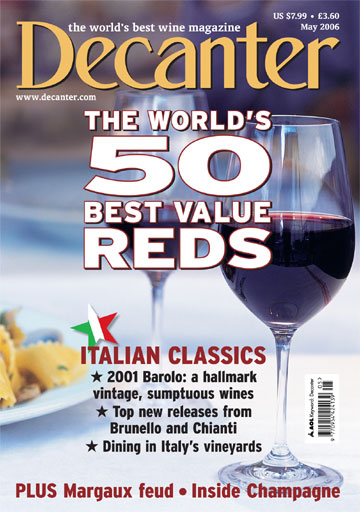
Sneak peek at Decanter wine awards


The results are in for the third annual international wine competition sponsored by Decanter, the prestigious British wine magazine.

The publisher will not reveal the full results until September, but I've obtained the gold medal list so you don't have to wonder for months.

• Katnook Estate Odyssey, Cabernet Sauvignon 2001, South Australia (Red) $50.

• Spier Vintage Selection Shiraz-Mourvedre-Viognier 2004, Australia Coastal Region (Red) $205.

• Auvigue Vieilles Vignes 2004 Bourgogne (White) $21.

• Bredon Brut NV Champagne (White) $21.

• Brown Brothers Patricia Cabernet Sauvignon 2002, Victoria (Red) $21.

• Charles Heidsieck Brut Millésimé 1989 Champagne (White) $145.

• Charles Heidsieck Brut Millésimé 1985 Champagne (White) $178.

• Comte Audoin de Dampierre Cuvée des Ambassadeurs NV Champagne (White) $39.

• Comte Audoin de Dampierre Cuvée Family Reserve 2000 Champagne (White) $99.

• D'Arenberg The Cadenzia, Grenache, Shiraz, Mourvedre 2004, South Australia (Red)$16.

• D'Arenberg The Laughing Magpie Shiraz Viognier 2004, South Australia (Red) $35.

• De Bortoli Show Liqueur Muscat NV, New South Wales (Red) $15.

• Dereszla Tokaji Imperium 2000 Tokaj-Hegyalja (White) $115.

• Domaine Christian Moreau Père et Fils Valmur 2004 Bourgogne (White) $55.

• Domaine Paul Blanck et Fils Riesling 2002 Alsace (White) $32.50.

• Domaines Schlumberger Gewurztraminer 2002 Alsace (White) $52.

• Duval-Leroy Blanc de Chardonnay 1998 Champagne (White) $40.

• F.X. Pichler Grùner Veltliner Dürnsteiner Kellerberg 2004 Wachau (White) $48.

• G.H. Mumm Millesime 1998 Champagne (White) $40.

• Gauthier 1998 Champagne (White) $40.

• Giacomo Marengo La Commenda, Tenuta del Fondatore 1999 Tuscany (Red) $20.

• Grant Burge 20 Year Old Tawny NV South Australia (Red) $25.

• Grant Burge Shadrach 2001 South Australia (Red) $30.

• Green Point Shiraz 2004 Victoria (Red) $18.

• Gróf Degenfeld Tokaji Aszú 6 Puttonyos 1999 Tokaj (White) $55.

• Groot Constantia Gouverneurs Reserve 2003 Constantia (Red) $26.

• Henri de Villamont 2002 Bourgogne (White) $30.

• Henriques & Henriques NV Madeira (White) $25.

• Houghton Chardonnay 2003 Western Australia (White) $18.

• Jean-Claude Boisset "Le Limozin" 2004 Bourgogne (White) $40.

• Longview Vineyards Duncan MacGillivray Yakka Shiraz 2004 South Australia (Red) $20.

• Mastroberardino Radici 2001 Campania (Red) $18.

• Michel Picard Les Chaumées 2002 Bourgogne (Red) $38.

• Mount Rozier Cabernet Sauvignon Cuvee Burr 2004 Stellenbosch (Red) $24.

• Möet & Chandon Dom Perignon 1998 Champagne (White) $100.

• Nicolis "Ambrosan" 2001 Veneto (Red) $35.

• Piper-Heidsieck Brut Divin Blanc de Blancs NV Champagne (White) $40.

• Piper-Heidsieck Brut Millésimé 1996 Champagne (White) $38.

• Piper-Heidsieck Cuvée Sublime Demi-sec NV Champagne (White) $38.

• Plantagenet Shiraz 2003 Western Australia (Red) $30.

• Quinta do Encontro Encontro 1 2003 Bairrada (Red) $135.

• Quinta dos Roques Touriga Nacional 2003 Dão (Red) $25.

• Royal Tokaji Mézes Mály, Tokaji Aszú 6 Puttonyos 1996 Tokaj-Hegyalja (White) $140.

• Royal Tokaji Natur, Essencia 1999 Tokaj-Hegyalja (White) $570.

• Shaw and Smith Shiraz 2004 South Australia (Red) $30.

• Simi Leonardo 2002 Broda (White) $67.

• Taittinger Nocturne Sec NV Champagne (White) $48.

• Taittinger Prélude Grands Crus NV Champagne (White) $50.

• Taylor's Marks & Spencer NV Port (Red) $18.

• Tenuta Oliveto il Leccio 2003 Tuscany (Red) $12.

• Terredora "Campore" Riserva 2001 Campania (Red) $25.

• Tyrell's Wines Vat 1 Semillon 1999 New South Wales (White) $50.

• Wakefield Wines St. Andrew's Cabernet Sauvignon 2002 South Australia (Red) $25.

• Weingut Bründlmayer Riesling Zöbinger Heiligenslein Lyra 2004 Kamptal (White) $40.

• Yalumba The Octavius, Old Vine Shiraz 2002 South Australia (Red) $55.

What's that? Oh, you're welcome.

To Dowd's Spirits Notebook latest entry.
To Dowd's Wine Notebook latest entry.
To Dowd's Brews Notebook latest entry.
Back to Dowd's Bar Blog
20060519

Uncorking a tradition


It's popular to look for closure in every facet of life these days. When it comes to wine bottles, that's particularly true.

The debate over alternatives to traditional use of corks, for reasons of hygiene, environmental correctness, finances and the like, is been amped up as more and more quality wines are sealed with non-traditional materials.

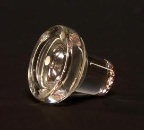
Numerous New Zealand wineries have pioneered the use of screwcaps known as Stelvin closures. A co-extruded cork, with an expanded core of DuPont Elvax ethylene-vinyl acetate, sold under the name VinoTop recently was put into use by the Austrian company Anton Volpini De Maestri Packaging Enterprises. Alcoa even has come up with the Vino-Seal glass sealer that looks something like a decanter stopper (see photo).

The Whitehall Lane Winery near Rutherford, CA, in the Napa Valley, has become the first winery in the world to select the Vino-Seal, using it to seal 45,000 bottles of Whitehall Lane premium 2003 Reserve Cabernet Sauvignon and 3,000 bottles of its premium 2003 Leonardini Vineyard Cabernet Sauvignon.

How do the folks who have to handle a large variety of wine for a living feel about non-cork bottle stoppers?

Opinions vary widely, but I came across an interesting take on the topic from the Parkers, Cheryl and Paul, who run the iconic Chez Sophie restaurant on the outskirts of tony Saratoga Springs, NY. The restaurant, currently in a former roadside diner but poised to move to a new hotel site in downtown Saratoga in time for the legendary Saratoga thoroughbred racing season, has been lauded by local and out-of-town critics for decades. One New York Times writer, for example, referred to it as "Three-and-a-half hours to France, by car."

The Parkers produce a homey periodic e-newsletter for friends and customers that deals with all sorts of topics. The current issues is on corks.

"Every now and then," they write, "Cheryl and Paul get a delivery of wine and find the bottles don't have corks. Especially in Alsace, winemakers are experimenting with the use of screwcaps. So far, every screwcapped wine we have received has been as tasty as the bottles we've received of the same vintage from the same producers with corks. And so far, none of the bottles has been spoiled, something that does happen occasionally with corked bottles.

"Nevertheless, Cheryl usually flips these bottles into the by-the-glass program, to use them up quickly without having to open them at the tables. When someone orders a bottle of these wines after tasting a glass, she finds it awkward to present the bottle at the table, mostly because she is a creature of habit, or at the very least, of traditions she has no real stake in perpetuating. What do you do with the top? Stick it in your pocket and run, or present it to the customer for examination? It took her a long time to learn to pull a cork gracefully, and it's a skill she doesn't particularly want to see become obsolete.

"Paul is less tickly about screwcaps. He thinks they're great, and thinks they are the way of the future so everyone, including his wife, should just get used to them."

One of the health issues involving corks is TCA, shorthand for a particular chemical that infects natural cork, resulting in a musty smell. That's one of the things that makes a wine become "corked."

Despite that, many traditionalists contend using anything other than cork cheapens the wine despite side-by-side tastings that show there is no difference in flavors of wines stoppered with screwcaps, artificial corks, glass or natural cork.

Modernists who would rather pay more for the wine than for the way it's stoppered point out that upwards of $1.50 a bottle is for the cork itself, given the ever-rising price of the natural product.

To Dowd's Spirits Notebook latest entry.
To Dowd's Wine Notebook latest entry.
To Dowd's Brews Notebook latest entry.
Back to Dowd's Bar Blog home page.

20060501

Mad Dogs & Englishmen join Fat Bastard


If that headline looks like a jumble puzzle, don't be fazed by it. It means just what it says: The creator Of Fat Bastard Wines has come up with a new naming gimmick.

Mad Dogs & Englishmen is a line of Spanish red and white wines created by Guy Anderson, the Brit who created the Fat Bastard line of French wines.

It includes three wines:

• The red blend, a Monastrell Shiraz Cabernet, sourced from Denominacion de Origen Jumilla, a hot, arid region in the southeast of Spain. It will retail for about $13.95.

• The reserve level, POSH Monastrell Shiraz Tempranillo, is also sourced from Jumilla, planned to retail at about $17.

• The Godello Chardonnay, a crisp white blend, is from the Bierzo region in the cool northwest of Spain. Projected retail price is $14.

To Dowd's Spirits Notebook latest entry.
To Dowd's Wine Notebook latest entry.
To Dowd's Brews Notebook latest entry.
Back to Dowd's Bar Blog home page.

The de-Napazation of Two-Buck Chuck


Bronco Wine Co., producer of the $1.99 Charles Shaw wine commonly nicknamed "Two-Buck Chuck," no longer will use "Napa" on labels of two if its wines.

The reason is simple. Bronco's Napa-named wines also contain grapes grown outside the Napa Valley.

The concession was made to settle a lawsuit brought by the California Department of Alcoholic Beverage Control at the request of the Napa Valley Vintners trade group to enforce a 6-year-old state law requiring that at least 75% of the grapes used to make a bottle of wine must be grown in the county named on the label.

Winemaker Fred Franzia (seen here) of the family that owns Bronco, has lost numerous rounds in the state Supreme Court and other courts attempting to overturn the law.

As the Los Angeles Times reports, "The three brands in question account for $17 million of Bronco's $500 million in annual sales. Franzia will change its Napa Ridge label to Harlow Ridge, named after the street in Napa where Bronco runs a large bottling plant. The label will note that the grapes are from Lodi, Calif., a town south of Sacramento that is gaining recognition for its wines. Franzia said Bronco would use Napa grapes in its Rutherford Vintners and Napa Creek lines."

To Dowd's Spirits Notebook latest entry.
To Dowd's Wine Notebook latest entry.
To Dowd's Brews Notebook latest entry.
Back to Dowd's Bar Blog home page.

Paging Douglas Green


Dear Mr. Dowd:

I live in Newton, MA. While visiting my son recently in Washington, DC, he offered me at dinner a Douglas Green shiraz that I liked and which was very inexpensive.

I have not been able to find it at the local liquor stores and it is illegal in Massachusetts to order wine shipments by mail. Would you know how can I find a store locally that carries it?

Many thanks.

Athanasius Anagnostou

Dear Athanasius:

Douglas Green is a South African winery that sells its wares at wine shops in most U.S. states, particularly in the East.

I suspect a few well-placed phone calls will turn one up for you. I'd suggest, for starters, trying Murray's Liquors, (two Newton locations) 747 Beacon St. (617/964-1550) and 675 Washington St. (617/332-1230) or Lower Falls Wine Co., 2366 Washington St., Newton, (617/332-3000).

You don't mention the vintage of the shiraz you liked, but 2003 was a good one and it usually retails for about $10 a bottle.

If those contact numbers don't help you locally, you may want to ask your son to order a few bottles and ship them to you. There's still nothing illegal about family members helping each other.

For those unfamiliar with Douglas Green, particularly the shiraz, it's an unblended, rich, velvety red with notes of prune, berry and spice. The lingering aftertaste makes it a good pairing with bold meat dishes.

Dear Mr. Dowd:

I am very grateful for your amazingly prompt and exceedingly useful advice.
Many thanks.

Athanasius Anagnostou

To Dowd's Spirits Notebook latest entry.
To Dowd's Wine Notebook latest entry.
To Dowd's Brews Notebook latest entry.
Back to Dowd's Bar Blog home page.

20060423

Gala Rouge rolls out the red carpet

PHOTO BY WILLIAM M. DOWD

As a youngster, I became enamored of the artwork of Henri Toulouse-Latrec and his ilk, those gaudy, active posters of a certain time in Parisian cafe society portrayed in such films as 1952's "Moulin Rouge."

Many years later, my never-flagging interest in the genre was moved to new heights by the addition of Nicole Kidman and some really funky music in the oddball 2001 remake of "Moulin Rouge."

So, it was with great interest I observed the introduction of Gala Rouge, a new wine from Brown-Forman's Bon Vivant Vineyards in France that made its debut in a decidedly unorthdox venue: last fall's International Vintage Poster Fair in New York.

The idea, says Laura Simmons, Gala Rouge brand director, was to avoid being one more data-laden French label in an already overcrowded market by presenting a classic Parisian poster-style face to the consumer world.

Brown-Forman certainly went to the right source for its labels. Jim Salvati, a California painter and designer who works with the Disney and Warner Bros. studios on a regular basis, came up with a 1920s look for an 1890 genre, depicting a flapper -- wearing a red skirt on the pinot noir label, a light amber version on the chardonnay -- on a swing and four different type fonts that, curiously, enhance rather than clash with the design.

The brand name itself is explained in a lighthearted way on the back label of the 2004 vintage debut varietals: "Ga-la Rouge (ga-luh roojz) n. 1. A red carpet event [see charity fundraisers or black tie weddings]. 2. A fun evening of your choosing [see Bunko night or poker club] ... " and so forth.

Beyond the design (the labels are available for sale in poster form), let's get down to some essentials:

• Price: $9.99 retail for 750ml bottles.

• Alcohol by volume: 12.5%

• Availability: Theoretically, as of Jan. 1 the test market phase ended and distribution went national. If it hasn't become available in your market, check the Gala Rouge Web site.

• Tasting Notes: The pinot noir is a fruit-rich wine with berries and woody elements in the nose. Soft tannins help make this a bold yet silky offering with a decent, lingering finish. Enough character to hold up to tomato sauces, grilled meats or woodsy elements such as morels, truffles and the like. The chardonnay presents a softly floral nose, then an initial citrus taste that quickly gives way to those floral notes and a touch of pineapple. Slightly astringent finish. Would pair nicely with lightly sauced foods, salads and wide-ranging tapas dishes that present sweet to salty to savory.

To Dowd's Spirits Notebook latest entry.
To Dowd's Wine Notebook latest entry.
To Dowd's Brews Notebook latest entry.
To Dowd's Non-Alcohol Drinks Notebook latest entry.
To Dowd's Tasting Notes latest entry.
Back to Dowd On Drinks home page.

'05 Bordeaux: Let the hype commence!


How good is the 2005 Bordeaux winemakers will be putting on the market next month?

To hear the French wine mavens tell it, the various ailments plaguing their industry are having no effect on the Bordeaux. In fact, the 2005 vintage is being hailed as one of the great vintages ever.

Anthony Rose, wine writer for The Independent newspaper in London, is among the most vociferous journalists calling for a bit of restraint. He wrote in the April 22 edition:

"Apparently insulated from the crisis engulfing the rest of France (where supply of wine outstrips demand, regulation reigns supreme, and producers find it harder to compete with foreign imports), Bordeaux châteaux set out their stall this month for a first taste of the 2005 vintage from the barrel.

"Such is the lavish wining and dining of the world's trade and press during the week-long tasting that Bordeaux might have a serious case to answer for deliberately fattening the calf. Amid the hype surrounding what some Bordelais are calling the greatest vintage ever, the knives are being sharpened for the killing they expect to make next month when they announce their prices."

This isn't to say it's all hype and hyperbole. Early tasters are saying highly complimentary things about the vintage. Here's a small sampling, beginning with Rose himself:

• "Despite inevitable variations in style, 2005 is likely to go down as a great vintage in line with the most recent classics of 1982, 1990, 1996 and 2000. Investors will cash in, but better news for wine drinkers is that many fine, lesser classified châteaux such as Batailley, Belgrave, Brane Cantenac and Talbot should be relatively affordable, as should good crus bourgeois in the mould of Beaumont, La Tour de By, Phélan-Ségur and Charmail."

• John Hunter of the Belfast Telegraph: "The good news for embattled Bordeaux producers is that the 2005 vintage seems to be the best in years."

James Suckling of Wine Spectator: "Just how special the 2005 wines in Bordeaux are will be better understood in late March, when the wine world descends on the region to taste the new wines. However, the first indicators of Bordeaux 2005 look very exciting, even if it was only sips from a few vats and barrels."

• Bill Blatch of Vintex, a Bordeaux wholesaler, quoted in Agence France-Presse: "I have never seen a vintage like this one. here's power, 14 percent alcohol, tannins, acidity and fresh fruit."

And then, there is Robert Joseph, noted English wine critic, putting things in his own perspective:

"Come off it, this is the third 'vintage of the century.' Three already, with 2000 and 2003, and we are only in 2006. It's a bit much."

To Dowd's Spirits Notebook latest entry.
To Dowd's Wine Notebook latest entry.
To Dowd's Brews Notebook latest entry.
Back to Dowd's Bar Blog home page.
20060415

Aussie grape dumping begins


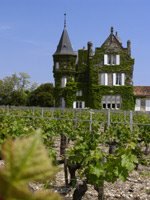
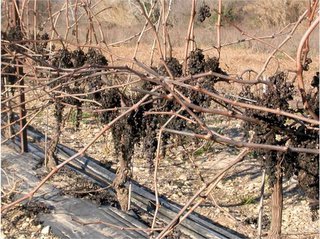
Tens of thousands of tons of Australian Riverland wine grapes will be dumped on the ground or left to rot on the vine this season.

As I reported back in February, the drastic action was looming because of a national oversupply of grapes that would force down wine prices.

Some South Australian growers have been left with no market for their fruit because some could not get contract renewals with wineries and some had contracts suspended. Industry officials say the region's lost income could hit at least $65 million.

Glenn Arnold, a grower in Loxton who was interviewed by ABC television, said, "We're just trying to survive. Everybody says there's swings and roundabout and you know good times are followed by bad times, bad times are usually followed by good times ... . We've just got to hang in there.

"If we don't we're out, we're gone. And that will happen to some people unfortunately and that's pretty bad."

To Dowd's Spirits Notebook latest entry.
To Dowd's Wine Notebook latest entry.
To Dowd's Brews Notebook latest entry.
Back to Dowd's Bar Blog home page.
Shiny new Trucks on the road to market


Red Truck of Sonoma, CA, is best known for its Red Truck and White Truck blended wines. They may take a back seat for a while as promotion attention is lavished on four new single-varietal wines: 2004 Red Truck Cabernet Sauvignon, 2004 Red Truck Merlot, 2005 White Truck Chardonnay and 2005 White Truck Pinot Grigio.

Red Truck was introduced in 2002 by Fred and Nancy Cline of Cline Cellars, wrapped in an eye-catching label created by local artist Dennis Ziemienski. It was a blend of syrah, petite syrah, cabernet franc, mourvedre and grenache, made by Charlie Tsegeletos. When Wine Business Monthly named it one of the "hottest small brands of 2004," the Clines and Tsegeletos last year added White Truck, a blend of sauvignon blanc, pinot grigio, chardonnay and viognier.

Dan Leese and Doug Walker, who purchased a majority interest of the brand from the Clines last year and formed the Axiom Wine Co., are behind the latest expansion of the line.

To Dowd's Spirits Notebook latest entry.
To Dowd's Wine Notebook latest entry.
To Dowd's Brews Notebook latest entry.
Back to Dowd's Bar Blog home page.

20060412

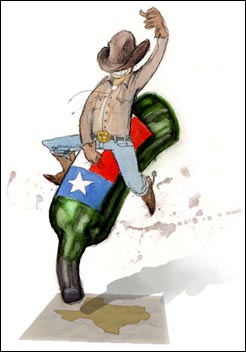
Texas cracks down on wine shipping

Texas has, for years, had a law on the books banning ordering wine from any out-of-state location. But, showing some common sense in favor of consumer freedom of choice, it has been operating under a 2001 court-orderd injunction not to enforce the law because of questions about its constitutionality.

That, apparently, has changed. The Texas Alcoholic Beverage Commission has been sending out cease-and-desist notices to out-of-state retailers that "were shipping the wine in illegally," according to TABC spokeswoman Carolyn Beck.

The state legislature passed Senate Bill 877 last May, allowing out-of-state wineries to ship wine directly to Texas consumers, but prohibits out-of-state retailers from doing the same thing.

The notices have prompted several members of the Sacramento, CA-based Specialty Wine Retailers Association and three Texas wine consumers to file suit against TABC Administrator Alan Steen. They allege the TABC action violates the U.S. Constitution's commerce clause.

"They basically invited this particular lawsuit by sending out these cease-and-desist orders," says John Hinman, a partner with Hinman & Carmichael LLP in San Francisco and general counsel of the Specialty Wine Retailers Association.

Of course, not all wine retailers are opposed to the TABC stance.

Jim Cubberley, manager of Austin fine wine merchant Lake Travis Wine Trader, told the Austin Business Journal that out-of-state wine retailers have been making sales without adhering to the same regulations he must contend with, such as those that require working through Texas' three-tier system of wine importers, wholesalers and retailers. That system adds about 20 percent more to the cost of his wine, as compared to the products sold by out-of-state wine shops, he says.

"People are able to sidestep the local retailers such as us by purchasing things that we cannot purchase," Cubberley told the Journal. "It's hard to be competitive with the extra hoop that we have to jump through."

To Dowd's Spirits Notebook latest entry.
To Dowd's Wine Notebook latest entry.
To Dowd's Brews Notebook latest entry.
Back to Dowd's Bar Blog home page.

20060407

Worried French put wood in wine, not vice versa

The sagging French wine industry often tries to put a good face on its situation despite increased global competition and less than stellar sales.

That now will be a little more difficult to accept since the French government plans to allow vintners to flavor their wine with wood shavings, a technique French winemakers have derided as the work of lesser mortals.

Adding wood chips to wine to increase oak flavor has long been practiced by some winemakers in the U.S., Australia and South America. The idea is to avoid the cost and time involved in aging wines in oak barrels.

"The use of wood shavings is already authorized by the European Community and will soon be entered into national regulation," France's Agriculture Ministry said in a formal statement, an effort to "open up the range of authorized winemaking practices."

Wine purists in France predictably have objected to the move, but others in the industry are all in favor of it. As Roland Feredj, director of the Bordeaux wine council known as CIVB, told the Associated Press:

"It is a remarkable and very realistic advance -- it's practically miraculous. In general, France always wants to give lessons to the rest of the world, and in winemaking we are realizing that the Australians and the Americans also have things to teach us about wine regulations."

The decision comes just a week after the government announced a $108 million bailout to help the national wine industry. More than $14 million of that sum is earmarked to increase exports. The industry has been on the decline in terms of sales and prestige for a half-dozen years, losing the leadership position in numerous countries as other nations' wine industries have grown and improved.

To Dowd's Spirits Notebook latest entry.
To Dowd's Wine Notebook latest entry.
To Dowd's Brews Notebook latest entry.
Back to Dowd's Bar Blog home page.

20060404

Breaking the Cornell code


NY70.0809.10.

NY73.0136.17

NY62.0122.01

Mmmmm, that's wine.

Those are the current designations of three wines in the Cornell University grape breeding program that will be named in July.

Cornell's Agricultural Experiment Station at Geneva in New York's Finger Lakes region is the center of creation of new grape hybrids. One of the most successful recent products is the Traminette grape, a superb descendant of Europe's Gewurtztraminer -- gewurtz the German word for spicy, tramin for the northern Italian town that was home to a grape varietal brought to France by Napolean's troops.

The above-mentioned species will get their names in July. Then it is up to winemakers whether they want to use that name on their labels or sell the wines as generic stuff, like Joe's Red Wine. For the most part, winemakers like to use the official names to sell to an increasingly wine-savvy market.

I had the opportunity to try the code-named wines during a visit last weekend with owner/winemaker John Brahm at the Arbor Hill Grapery, a small but very productive winery and specialty foods manufacturer in Naples, N.Y., on the west side of Canandaigua Lake.

Brahm, 63, a Cornell grad who was born and raised in the Finger Lakes, is someone to listen to when he's excited about a grape. His track record for producing award-winning wines is admirable. Among his most recent triumphs were a pair of gold medals in the 2005 New York State New York Wine & Food Classic with a best-of-class Rhine Street White and a 2002 Classic Traminette.

Brahm shared a taste of NY70.0809.10 (SV 18-307 x Steuben), a light-bodied, late-maturing vinifera type wine with an emphatic blueberry nose, finishing with a darker berry flavor and a hint of vegetal notes.

The NY73.0136.17 (NY33277 x Chancellor x Steuben), a mid-season maturer, has a distinct peppery character with moderate tannins and a much more complex structure.

"My biggest decision now is whether to leave these alone, or figure out exactly how I want to blend them," Brahm said. "Sometimes you get it just right on the first try and shouldn't keep fooling with it. I'll have to give that some more thought."

The third coded grape (Couderc 299-35 x Muscat Ottonel), also a mid-season ripener, is a highly-flavored muscat that would be best used in blending or as a dessert wine. It has a banana start and citrus finish that immediately makes one think of pleasing food accompaniments.

Whether any of these three will join Traminette as an emerging star will take several years to determine.

Traminette was the fifth wine grape cultivar to be named by the Cornell Agricultural Experiment Station, following the release of Cayuga White in 1972, Horizon in 1983, Melody in 1986 and Chardonel in 1991.

It's a late mid-season white wine grape that has shown good productivity, partial resistance to several fungal diseases, and cold hardiness superior to its parent Gewürztraminer. Traminette resulted from the cross of the Gewurtz and the Joannes Seyve 23.416, made in 1965 at the University of Illinois, which abandoned it, then picked up and planted by Cornell in 1968. The first fruit was in 1971 and the original vine was propagated in 1974.

Traminette is considerably hardier than Gewürztraminer and the equal of other similar cultivars such as Seyval, Vidal blanc, Cayuga White and Aurore. Three growers in New York and one each in Georgia, Maryland, Missouri and Michigan tried test-growing it in its infancy, with the best results in New York leading to the spread of its use there, where it ripens in the early October.

To Dowd's Spirits Notebook latest entry.
To Dowd's Wine Notebook latest entry.
To Dowd's Brews Notebook latest entry.
Back to Dowd's Bar Blog home page.

Constellation firmament expands again


Constellation Brands Inc., the world's largest winemaker, is shelling out $1.09 billion to buy Vincor International Inc., the Canadian company.

The purchase is Constellation's ninth since 2000 as it added Robert Mondavi Corp. and the Australian vintner BRL Hardy Ltd. Constellation had made two unsolicited bids and a hostile tender offer for Vincor late last year, all of which were rejected, before agreeing to a friendly takeover.

"We're combining our brands with the scale and distribution and marketing capabilities that the much larger Constellation brings to the party," Vincor CEO Donald Triggs said in a media interview.

Constellation is based in Fairport, near Rochester, NY. Vincor, founded in 1874, is based in Mississaugua, Ontario, but owns wineries in Canada, California, Washington, Australia and New Zealand, turning out such wines as Inniskillin, Toasted Head, Jackson-Trigg and Kim Crawford.

To Dowd's Spirits Notebook latest entry.
To Dowd's Wine Notebook latest entry.
To Dowd's Brews Notebook latest entry.
Back to Dowd's Bar Blog home page.

20060402

NY wine center on a very fast track

FROM THIS ...


... TO THIS ...

Photos by William M. Dowd


... IN JUST SEVEN MONTHS,

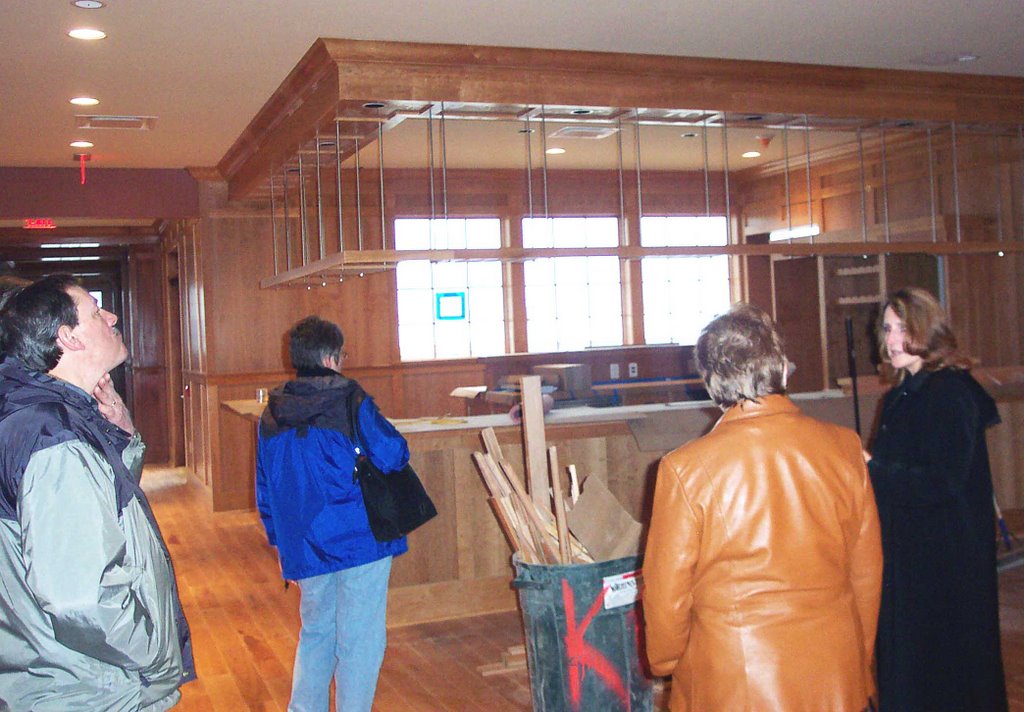
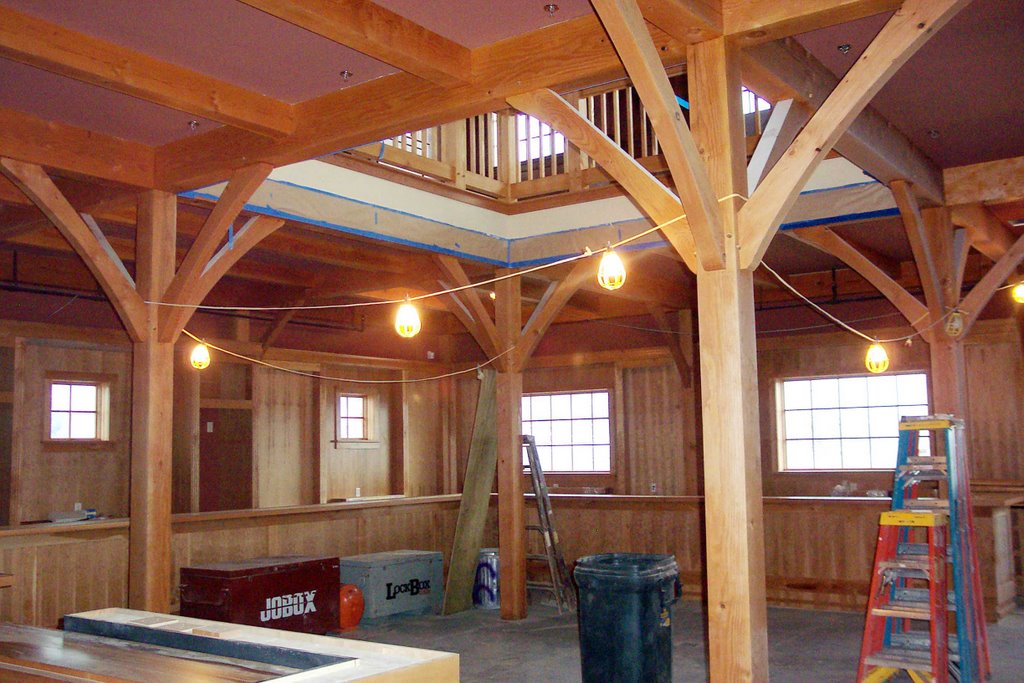
CANANDAIGUA, NY -- The New York Wine & Culinary Center project has gone from groundbreaking ceremony in August 2005 to under roof and 10 weeks from a projected soft opening.

I toured the facility, on the shores of Canandaigua Lake near Rochester, NY, this weekend and -- confession time -- was amazed at the rapidity of construction.

Walking through construction-dust-coated corridors, offices and public spaces, the impressive upscale Adirondack-style design was unveiled -- from multi-hued, handworked wood wainscoting, stair railings, display shelving and counters to a 36-station kitchen, slate-floored rest rooms and views of the lake, the roughly $7 million project is coming together at a pace that some doubters, me included, have difficulty believing.

The center, noted director Alexa Gifford, will include entrance landscaping geared toward representations of indigenous plants from the region.

"We'll have local flowers and shrubs, grape vines and the like that will set the mood for visitors," she said. "Americans in general are used to pulling into a parking lot that leaves you right up to the door. We'll be guiding people along a path that creates a mood, and then they'll walk into this beautiful facility that will build on that atmosphere."

The center is being financed by $2 million in state funding and the rest from various private funds. The major private backers are Centerra, formerly known as Constellation Brands, the locally-headquartered company that is the world's largest manufacturer and distributor of alcoholic beverages; Wegman's Food Markets, a five-state chain based in Rochester, and Rochester Institute of Technology's Hospitality and Service Management School.

The mission of the Center will be to foster knowledge in the wine, agriculture and culinary arts industries across New York State. To do so, the Center will offer hands-on courses in culinary science; interactive exhibits on New York State agriculture, foods and wines; demonstration space; and a live garden outside of the building.

"We have been doing a lot of talking to various businesses and organizations that, understandably, are asking, 'What's in this for me? Aren't you competition?',' said Gifford. "We've been explaining that in no way will we compete with private businesses. We're here to enhance an understanding and support of New York's wonderful food and wine products. They like knowing that, and we're planning to work with schoolkids as well as tourists and businesses."

The 15,000 square-foot facility will include a tasting room with a rotating selection of wines from New York's major regions (Niagara/Lake Erie, Finger Lakes, Hudson Valley and Long Island), a wine and tapas bar for light meals and wine-and-food pairings, a theater-style demonstration kitchen, a training kitchen for hands-on cooking classes, and industrial kitchens for credited culinary classes and corporate training. It also will house the offices of the New York Wine and Grape Foundation.

Agriculture is one of New York's most vital industries, encompassing 25 percent of the state's landscape and generating more than $3.6 billion last year. It has 7.6 million acres of farmland with 36,000 farms and is the nation's third-largest wine-producing state after California and Oregon.

The project marks a major step in increasing the visibility of New York's wine industry to tourism and agribusiness interests. How significant the industry is to the state is shown in a just-released report from MKF Research, a California-based consulting firm analyzing New York's situation.

With 31,000 acres of vineyards, 212 wineries and 1,384 grape farms, New York is the nation's second largest wine producer after California and the third biggest grape grower behind California and Washington.

Wineries, grape producers and related businesses in New York, from liquor stores to makers of bottles, glasses and labels, account for almost 36,000 jobs and a $1.3 billion payroll, the state-funded study reported.

In addition, it said that wine sales alone generate $420 million in sales, but the state industry's multiplier impact on the economy came to $3.4 billion in 2004.

A FEW MORE VIEWS

Photos by William M. Dowd


Alexa Gifford discusses the Center's progress with Jim Trezise, head of the New York Wine & Grape Foundation.


To Dowd's Spirits Notebook latest entry.
To Dowd's Wine Notebook latest entry.
To Dowd's Brews Notebook latest entry.
Back to Dowd's Bar Blog home page.

20060330

Washington wine center under way


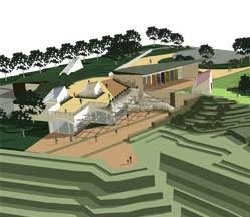
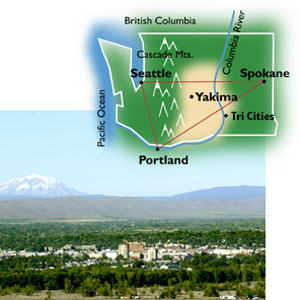
Wine tourism marches on. As western New York sees construction proceeding at a rapid clip on a center for wine and food near Canandaigua Lake that it hopes will draw tourists, ground has been broken in Washington state for the Walter Clore Wine and Culinary Center (seen here in architect's drawing).

It's a $9.2 million center, located in Prosser in the Yakima Valley wine region, that its backers foresee as both a destination for tourists and a place for winemakers to gather.

The facility, expected to open in May of next year, will have a 17,500 square-foot building, vineyards, organic gardens and a public park. The main building will have a restaurant, exhibition galleries, a theater, a demonstration kitchen, wine bar and a retail shop.

The center's namesake is the late Walter Clore, regarded as the father of Washington wine. The state is the No. 2 producer of premium wine in the United States, trailing only California.

To Dowd's Spirits Notebook latest entry.
To Dowd's Wine Notebook latest entry.
To Dowd's Brews Notebook latest entry.
Back to Dowd's Bar Blog home page.

20060329

Attention, wine-loving manly men


Let the backlash begin.

First it was winemakers unashamedly creating products aimed at the female market. Now, the latest niche is ... men?

Yup. Ray's Station, a California winery, has launched a line of merlots and cabernet sauvignons it says is just for men -- the kind who like to hunt and fish, as Ray's ads portray them; the kind who like manly emblems, like the galloping stallion on the label of "Hearty Red Wines for Men" (about $15 a bottle).

Brian Hilliard, head of marketing for Ray's Station, says they will produce no white wines before their time, or any other time. Whites, the folks at Ray's proclaim, are for women.

So, who exactly in that huge market niche labeled "men" is the target demographic?

Says Hilliard, "These guys, they're married; they've got a couple of kids. Wine is part of their lives, but it's not integrated in a way that they really force themselves to be knowledgeable."

Ray's Station is a six-year-old Sonoma County operation owned by Jackson's Estate Brands. Its production advantage is having a surplus of hillside-grown grapes from Jackson properties in the Alexander, Knights and Bennett valleys of the county.

"We have a lot of plantings and always have an excess of juice," Hilliard told the San Francisco Chronicle. "Cabernet and Merlot in the $11 to $15 category is the hottest in the industry, so we're hitting that point with wines made from 90 percent mountain fruit. We make some money, and the customer gets one heck of a value. It's not a brand that's going away. We can sustain Ray's Station for years to come."

To Dowd's Spirits Notebook latest entry.
To Dowd's Wine Notebook latest entry.
To Dowd's Brews Notebook latest entry.
Back to Dowd's Bar Blog home page.

20060328

An ancient land revives love of the grape


A few years back, I hosted a wine tasting at which I supplied the basic lineup but invited guests to bring a bottle along. The catch: It had to be from a country bordering the Mediterranean.

The average person's geographic knowledge being, regrettably, as shaky as it is, many of them were lost once they got past a short list covering Spain, Italy, Greece and France. Some suggested Portugal, then realized that was off base after checking a map. Others automatically excluded a number of countries, assuming no wine would come from predominantly Muslim countries. Still others did their homework.

By the time the evening was over, everyone knew you could find wines from such Mediterranean-bordering lands as Turkey, Slovenia, Greece, Albania, Croatia, Morocco, Israel, Lebanon, Jordan, Algeria, Tunisia, Syria and Egypt.

While most of those countries don’t produce what most people would regard as fine wines, you can find a few gems if you look hard enough.

I regard Slovenian wines, for example, as the Rumanian wine of the 2000s. Just as Rumania was sending us dirt-cheap, big-taste reds from the Premiat winery back then, Slovenia is sending us dirt-cheap, big-taste reds from the Avia winery today.

One of these days Turkish wines may regain the cache they had in bygone eras. Wine grape cultivation is increasing in that bi-continental nation on the eastern end of the Mediterranean, a region that in biblical times was known for its high-quality wine and which some modern researchers believe may well have been where wine originated.

The topic of wine-grape growing and winemaking can be prickly in Turkey, where Christian and Muslim practices sometimes clash.

Of course, when it comes to reality checks, commerce often trumps everything else. Take Wine Istanbul 2006, a trade show that was part of the 5th annual Gourmex Fair that just wrapped up in the Turkish capital of Istanbul.

Among the gourmet products being displayed and sold there to a gaggle of industry insiders will be wine, raki, vodka, whiskey, cognac and beer, according to its organizers. And, to show it's not a passing fancy, the show will offer exhibits of wine production equipments.

One example of the uptick in Turkish wine interest can be seen in a rural area of central Anatolia, about 65 miles north of the capital of Ankara. There along the Kizilirmak river in an area of treeless hills, about 20 of the 40 families in the tiny village of Uyurca grow wine grapes.

When the Ozbek family began planting grapes, "Our neighbors said it was wrong, against Islam, to produce wine. They said our soil would dry up and it would no longer rain or snow. But that was more than 10 years ago," Cengiz Ozbek, 37, said in an interview with IOL, a South African news service. "Then they saw how much money we started to make. Now they, too, are planting vineyards."

Turkey is the No. 4 producer of grapes in the world, but only 2% is used in wine production.

As IOL notes, "Nearly all Turks are nominally Muslim, but the country's secular system keeps religion on a tight rein and has long fostered a tolerant attitude towards alcohol despite the Koran's teaching that it is sinful."

"The old imam here was against the vineyards, but he left and was replaced by a younger, more pragmatic man who says it is a matter for the individual's own conscience," Ozbek said.

Uyurca boasts a mild microclimate and soil ideal for grapes. The villagers now produce about 500 tons of grapes annually, up from just 12 tons in their first harvest in 1996. It sells its entire production to Kavaklidere, Turkey's largest winemaker.

At one time, Christian Greeks and Armenians dominated the Turkish wine industry. When the empire collapsed after World War I, many left Turkey. Kavaklidere was founded by Turkish entrepreneurs in Ankara in 1929 and had the support of Mustafa Kemal Ataturk, president and founder of modern Turkey.

Today, Kavaklidere has a production capacity of 18.5 million liters and a 35% share of Turkey's registered wine market. It exports about 20 percent of its total production, mostly to Europe. Its best-selling wines are Kalecik Karasi, Okuzgozu and Narince.

Another major player is Doluca, which got a $15 million upgrade two years ago that resulted in a new winery with the latest winemaking technology. Doluca has an annual production of 10 million bottles, with Villa Doluca and Ozel Kav its leading labels.

The main hassles Turkish wineries are facing today are a large illegal liquor market, which is cutting into domestic sales of alcoholic beverages and an ever-increasing tax burden. Tax on wine has grown by more than 100% since the Justice and Development Party (AKP), an Islamic group, came to power in 2002. Tax on beer has risen by 50% and on raki, the most popular liquor, 26%.

The AKP says it has no plans to outlaw alcohol, insisting it only wants better regulation of the trade.

As to the quality of Turkish wines, the smaller, independent wineries turn out some interesting blends. Kavakladire's mass-market wines are a decent middle-of-the-road product. Noted wine writer Daniel Rogov offers his tasting notes on a fairly broad range of Turkish wines I have found helpful.

To Dowd's Spirits Notebook latest entry.
To Dowd's Wine Notebook latest entry.
To Dowd's Brews Notebook latest entry.
Back to Dowd's Bar Blog home page.
Russian official seeks ban on some wines


Gennady Onishchenko, head of Russia's State Sanitary Service, has proposed a ban on the import of wines from Georgia and Moldova, citing health concerns.

"I request that legal measures be taken to stop imports of wine and wine-making products from Moldova and Georgia and manufactured on the territory of these republics," Onishchenko said in a letter addressed to the head of the Federal Customs Service, according to the RIA Novosti news service.

There is nothing inherently wrong with wines from the two former Soviet Union republics. The problem lies in a growing market for low-quality, unregulated bootlegged wines being sold as high-end Georgian and Moldovan products.

Citing numerous violations of health regulations, Onishchenko suspended health and hygiene permits for wine imports from the two countries effective Monday. The ban will stay in effect, he said, until the violations are eliminated.

Hygiene authorities in Moscow have already suspended wine import permits because 60% of the wine imported from the two countries allegedly fails to meet health safety regulations and is stored without documents indicating that pesticides were used during the wine-making process.

To Dowd's Spirits Notebook latest entry.
To Dowd's Wine Notebook latest entry.
To Dowd's Brews Notebook latest entry.
Back to Dowd's Bar Blog home page.
20060325

A hardcore passion for wine


Francis Coppola. Fess Parker. Greg Norman. Madonna. Sting. Olivia Newton-John. Natalie Oliveros. The list of celebrities-turned-vintners, or at least hiring winemakers to produce their signature wines, is growing at a rapid clip.

By the way if you don't know who Greg Norman is but you do know who Natalie Oliveros is, well, we know something about you.

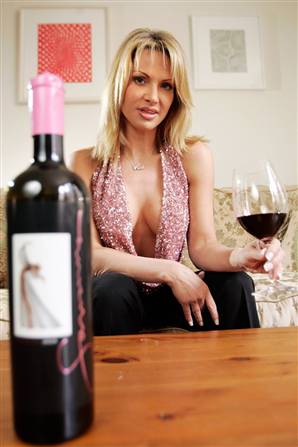
Oliveros (seen here) is better known to her fans as adult video actress Savanna Samson. But to the wine world, she's a serious member of the community because of her Savanna Sogno Uno ("Dream One" in Italian) wine. In fact, she has produced wines for the Vatican.

Oliveros/Samson, 31, is from Watertown in upstate New York. She's the star of "The New Devil in Miss Jones." Her new wine just received a score of 90-91 out of 100 from the phenomenally influential wine guru Robert Parker for her Italian red. On Parker's scale, a score of 90-95 describes "an outstanding wine of exceptional complexity and character."

The wine was developed under the hand of Roberto Cipresso, a noted Italian winemaker Oliveros recruited for her project. Her husband, a wine merchant in Italy, introduced her to Cipresso.

"I never wanted to just do gimmick. That would just happen with me being a porn star, me having a photographer shoot the label, how risque could I get on the label — all those things," Samson said in a media interview. "I knew I wanted Roberto to make my wine. I just love his passion."

The wine label is Savanna, with the Sogno Uno its premier item. It's a blend of Tuscan grapes -- 70% Cesanese, 20% Sangiovese, 10% percent Montepulciano.

To Dowd's Spirits Notebook latest entry.
To Dowd's Wine Notebook latest entry.
To Dowd's Brews Notebook latest entry.
Back to Dowd's Bar Blog home page.

20060320

Italians claim grape science breakthrough


It might sound like a wild overstatement, but Italian scientists claim to have cracked the life code of the pinot noir grape plant, a breakthrough they say is to change the future of winemaking.

Experts from the San Michele all'Adige Agrarian Institute on Monday unveiled the results of six years of research in which they decoded the plant's genome -- the complex molecular chains that constitute each organism's unique genetic heritage, according to the ANSA news service.

"Today's event is agriculture's equivalent of the first moonwalk," said Riccardo Velasco, head of the team that decoded the DNA sequences. "Agriculture will never be the same again" .

Pinot noir, often known as pinot nero in Italy, is the first fruit and only the second food crop after rice to have its genetic material laid completely bare, ANSA reported.

Francesco Salamini, a former researcher with the Max Planck Institute and a member of the Institute's board, said the advance will lead to benefits for the environment because the information about the plant's gene sets will make it possible to produce new pesticides that protect it better but have less of an impact on the ecosystem.

ANSA said the research shows that the pinot noir genome is spread across 12 chromosomes and is made up of around 500 million bases of DNA. The institute, based in the northern Italian province of Trento, collaborated in the project with the US firm Myriad Genetics Inc., which has taken part in decoding human and rice genomes .

"It's a historic moment," said Mark Skolnick, Myriad's chief scientific officer. "Let's hope that next time we can toast with wine obtained from this research."

Pinot noir is a red grape used by winemakers everywhere. It is somewhat delicate, but is widely considered to produce excellent wines.

To Dowd's Spirits Notebook latest entry.
To Dowd's Wine Notebook latest entry.
To Dowd's Brews Notebook latest entry.
Back to Dowd's Bar Blog home page.
'Co-op' wines emerging in New York


Wineries at both ends of New York are creating what I like to call co-op wine.

Three Finger Lakes wineries have teamed up to create Tierce, a 2004 vintage dry riesling that will be released on May 5 at a dinner at the Red Newt Bistro featuring foods created by that restaurant along with Fox Run Bistro and Madderlake restaurant.

Peter Bell of Fox Run, Johannes Reinhardt of Anthony Road and David Whiting of Red Newt each contributed a portion of riesling wine, made from fruit grown on the slopes of Seneca Lake, to create 100 cases of a single wine. They also chose to use a screw cap closure because, as Bell said, "corks, natural or synthetic, have a tendency to affect the wine's aroma.

Down on Long Island, five winemakers have created Merliance, a 100% merlot blend with two barrels each from Pellegrini Vineyards, Raphael, Sherwood House Vineyards, Shinn Estate Vineyards, and Wolffer Estate Vineyard.

It will be unveiled on April 3 at Craft restaurant in Manhattan.

Meanwhile, also on the New York wine front, Chateau Buffalo is officially open for business.

The husband-wife team of Carl Schmitter and Suzi Maciejewski have created the first winery in Buffalo and Erie County, featuring their own dessert wines along with a selection of New York wines from various regions and many “Pride of New York” agricultural products such as jams and jellies, pickles, maple syrup, mustard, chutneys, etc.

To Dowd's Spirits Notebook latest entry.
To Dowd's Wine Notebook latest entry.
To Dowd's Brews Notebook latest entry.
Back to Dowd's Bar Blog home page.

20060315

Yakima Valley appellation split


The Rattlesnake Hills, southeast of Yakima in central Washington, has become the state's ninth federally recognized wine grape-growing region.

The U.S. Tobacco Tax and Trade Bureau approved the Rattlesnake Hills for appellation status, effective March 20. The federal bureau awards appellation status to regions, also known as American Viticultural Areas, to recognize their distinct climate and soil features.

The 68,500-acre region lies within the Yakima Valley appellation, stretching from Union Gap, just south of Yakima, to north of Sunnyside about 45 miles to the east. Its loam soils hold moisture better than some other Washington areas and it historically is slightly warmer than the rest of the Yakima Valley appellation.

Gail Puryear, owner and winemaker at Bonair Winery in Zillah, and his wife, Shirley, were among proponents of the new appelation.

"We can ripen the warmest varieties, the sun-loving varieties like syrah and nebbiolo, but we have micro-climates because of the varying topography," he told the Associated Press. "Riesling does well in the cool micro-climates. We grow everything in between."

Dick Boushey, a Grandview grower who opposed the appellation request, told the AP the issue had become divisive in some corners. Half the 26 parties submitting comments to the government were opposed to the division of the current appellation.

"It just shows I don't really understand what it takes to be an AVA, and I guess I have a little bit less regard for what an AVA is," he said. "Whatever happens, we all need to work together. There probably will be more AVAs in the future, and I think we all want the same thing: to promote the area in any way we can."

If the application met all the criteria to be named an appellation, it just gives the Washington wine industry one more opportunity to market itself, said Robin Pollard, executive director of the Washington Wine Commission, a promotion agency funded by member fees on growers and wineries.

The Chelan area in north-central Washington and the Ancient Lake region near Moses Lake in central Washington have proposals for appellation status pending.

Washington is the No. 2 producer nationally of wine, after California. More than 350 wineries, 350 wine-grape growers and 30,000 vineyard acres support the more than $2.5 billion annual industry.

20060313

South Africa short on white wine


The glut of grapes in such major wine-producing areas as Australia and France certainly isn't being echoed in South Africa.

There is what industry analysts call "an acute shortage" of white wine in the Cape region, following last year's devastating drought after a surplus just three years ago.

This season's harvest is slightly better than the previous one, but still insufficient for domestic and export markets, leading to an increase in the already short supply of white wine.

Henk Bruwer, chairman of Wine Cellars South Africa, told SABC News, "We have to satisfy the demands of the local consumers and when you do that you have to make sure that you actually satisfy the trademark you are building, satisfy the palate and taste of the consumers. Don't let consumers down in a wine industry."

Because prices are determined by supply and demand, consumers are likely to have to pay more and wine sellers will have to import more as well.

To Dowd's Spirits Notebook latest entry.
To Dowd's Wine Notebook latest entry.
To Dowd's Brews Notebook latest entry.
Back to Dowd's Bar Blog home page.

20060311

U.S.-EU wine agreement signed


Winemakers in the U.S. and European Union got some protection for their practices and labeling Friday when the two entities signed an agreement to facilitate bilateral trade in wine valued at $2.8 billion annually.

The Office of the U.S. Trade Representative said the agreement actually was reached back in September after 20 years of negotiations but could not be finalized until the EU’s agricultural ministers granted approval, which came in December 2005.

Among key points:

• The U.S. agrees to curb the use of European geographic names such as "chianti" or "burgundy." Both sides agree to recognize certain names of origin such as Champagne in each other's market, simplifies certification requirements and defines parameters for optional labeling elements of U.S. wines sold in the EU market.

• The EU’s recognizes certain wine-making techniques used by U.S. vintners and a consultative process for accepting new wine-making practices. One of the major differences between U.S. and European vintners, for example, is the common use by Americans of oak chips to achieve a flavor European wine makers achieve by aging their wines in oak barrels.

The Europeans have long objected to the use by some U.S. winemakers of what some cal "semi-generic" labels, insisting they are specific to the regions in which the wines are made. Under Friday’s agreement, however, American wineries currently using them are exempted, something industry analysts speculate will continue to anger many European producers.

"Wine makers on both sides of the Atlantic have the right to be proud of how tradition, climate and expertise combine to create unique tasting experiences,” said Rob Portman, U.S. Trade representative. “This agreement honors these differences."

In 2004, global U.S. wine exports exceeded $736 million, with exports to the European Community more than $487 million, according to the USTR release. Total U.S. imports of wine from other countries in 2004 were nearly $3.4 billion, and U.S. imports from the European Community exceeded $2.3 billion.

To Dowd's Spirits Notebook latest entry.
To Dowd's Wine Notebook latest entry.
To Dowd's Brews Notebook latest entry.
Back to Dowd's Bar Blog home page.
20060309

Willy Frank dies at 80


Willy Frank, the outspoken New York winemaker who built on his immigrant father's belief that the Finger Lakes could become a major wine producer, is dead at the age of 80.

Frank died in his sleep during a business trip to Naples, FL., according to his son, Frederick.

Dr. Konstantin Frank, who fled Ukraine during World War II to come to the U.S., was one of the prime movers in planting delicate vinifera grapes. Willy took over in 1984 and moved the project well beyond those humble beginnings to create a successful, highly regarded company,Dr. Konstantin Frank Vinifera Wine Cellars, based on the shores of Keuka Lake.

More than half of New York's 212 wineries grow viniferas, which are rapidly replacing native labrusca and French-American hybrids that long gave the Finger Lakes a reputation for inexpensive, simple wines. Rieslings and gewurtztraminers have emerged as the most successful of the high-end grapes.

In addition to son Frederick, Frank is survived by his wife of 49 years, Margrit, his daughter, Barbara Guior of Summit, N.J., five grandchildren and two sisters.

To Dowd's Spirits Notebook latest entry.
To Dowd's Wine Notebook latest entry.
To Dowd's Brews Notebook latest entry.
Back to Dowd's Bar Blog home page.
20060308

Texas gets new viticultural area


Texas has added a viticultural area to its arsenal: the Texoma American.

It's an area along the Texas-Oklahoma border where horticulturist Thomas Volney Munson began cultivating grapes more than a century ago in what he referred to as a "grape paradise."

The federal government has designated a 3,650-square-mile area of sandy hills sloping to the Red River and Lake Texoma as the viticultural area.

"I don't know if it's 10 years or 20 years or 100 years, but the (region) will fill in and we'll have several thousands of acres of grapes around here," said Gabe Parker, owner of the Homestead Winery in Ivanhoe. "The land is appropriate for it."

The number of wineries in the Texoma area has grown from two to six in the past three years, and there now are 225 acres dedicated to vineyards in the fledgling area.

Texas has 109 wineries statewide, up from just 40 in 2000 to 109 this year, according to the Texas Wine Marketing Research Institute at Texas Tech University. The wineries' output makes Texas the nation's fifth-largest wine producing state.

To Dowd's Spirits Notebook latest entry.
To Dowd's Wine Notebook latest entry.
To Dowd's Brews Notebook latest entry.
Back to Dowd's Bar Blog home page.
20060304

Canandaigua Wine Changes Name


Constellation Brands Inc.’s wine division has taken on the name Centerra Wine Co., dropping its original name, Canandaigua Wine Co.

The newly-named division, one of four under the Constellation umbrella, will keep its headquarters in Canandaigua, NY, near Rochester.

“We are extremely proud of our history, but we have changed dramatically with the addition of premium and super-premium wine brands to our portfolio,” Centerra president William Encherman said in a statement. “The time is right to embrace a new name that brings to life the broad spectrum of brands we now represent, while capturing in a contemporary way our commitment to craftsmanship and innovation.”

In 2004, Canandaigua acquired the Robert Mondavi Corp., and since has launched its 3 Blind Moose, Trove and ultra-premium Houghton brands. Under the restructuring and renaming, Centerra's portfolio now includes Ravenswood, Cook’s, Arbor Mist, Vendange, Inglenook, Paul Masson Brandy, Turner Road Vineyards, Talus, Papio, Covey Run, Ste. Chapelle, LaTerre, Vendange, Nathanson Creek, Inglenook, Almaden, Alice White, Monkey Bay, Taylor, Cribari, Wild Irish Rose and Manischewitz.

To Dowd's Spirits Notebook latest entry.
To Dowd's Wine Notebook latest entry.
To Dowd's Brews Notebook latest entry.
Back to Dowd's Bar Blog home page.
 

Mass. OKs Re-Corking by Restaurants


Massachusetts has joined several other states in allowing restaurant patrons to take home unused portions of their wine.

On Thursday, March 2, the commonwealth's Alcoholic Beverages Control Commission issued a temporary ruling that put the new re-corking law into effect. Restaurants will be required to re-cork the bottle and seal it in a transparent bag.

Reaction in the trade has, as expected, been mixed. Some restaurateurs dislike what they see as the inconvenience and the need to train staff to comply. Others think it will increase wine sales to people who normally would pass on buying wine because they don't want to finish an entire bottle before driving.

The new regulations also require the restaurant to supply a receipt showing the date of the meal, including the purchase of the wine. Patrons are limited to one bottle of uncorked wine each.

To Dowd's Spirits Notebook latest entry.
To Dowd's Wine Notebook latest entry.
To Dowd's Brews Notebook latest entry.
Back to Dowd's Bar Blog home page.

20060228

Napa Cabbage To the Tune of $1.87 Million


Cabernet sauvignons, which accounted for 129 of the 181 lots offered, dominated the Napa Valley Vintners' annual trade-only wine auction that pulled in $1.87 million.

Sixty-seven bidders bought 181 lots of wine, including five-case, 10-case and 20-case lots at the annual event, which raises funds to support the nonprofit group's efforts to promote and protect the Napa Valley, CA, brand. That represented a 10 percent jump in volume over the prior year, and overall nearly 1,200 cases were up for auction.

"This is our annual bake sale where we raise money for our association's programs," John Skupny, owner of St. Helena's Lang & Reed Wine Co. and co-chair of the event, told reporters.

More than 1,000 winemakers, restaurateurs, retailers and wine wholesalers attended the event, held at the Culinary Institute of America at Greystone. The top bidder was Gary Fisch, owner of Gary's Wine and Marketplace in New Jersey, who paid $220,500 for 16 lots totaling 115 cases.

Top lots sold included:

Rombauer Vineyards ($85,000).
Shafer Vineyards ($75,000).
Silver Oak Cellars ($39,000).
Paraduxx ($37,000).
Beringer Vineyards ($35,000).
Lewis Cellars ($32,000).

To Dowd's Spirits Notebook latest entry.
To Dowd's Wine Notebook latest entry.
To Dowd's Brews Notebook latest entry.
Back to Dowd's Bar Blog home page.
20060227

Ignoring Grapes May Help Aussie Wineries


Australia has been cursed with good grape crops for several years. The bumper crops have resulted in a glut on the market and overproduction of wine, which is depressing prices.

Now, a simple solution may be in the offing: a 7% reduction from the 2005 harvest if enough grapes are left to wither on the vine, according to the Australian Wine and Brandy Corp.

Lawrie Stanford, the corporation's information and analysis manager, told News.com.au, "The expected average yields would be viewed with some relief by many winemakers holding excess wine in stock. This will allow wine reserves to be reduced to more reasonable levels while the good quality grapes from the 2006 harvest will enhance Australia's competitiveness in vital overseas markets."

About 20 per cent of the 2006 harvest had been picked, predominantly white grapes and a small amount of red grapes.

To Dowd's Spirits Notebook latest entry.
To Dowd's Wine Notebook latest entry.
To Dowd's Brews Notebook latest entry.
Back to Dowd's Bar Blog home page.
20060221

Chinese Wine Taking Wing


If you're in a major airport looking for an unusual last-second gift, you might think about a bottle of Dragon Seal wine.

Dragon Seal? Not exactly a household wine brand in the U.S., but the made-in-China wine is about to become available for the first time ever in some duty-free airport stores. Camus, the cognac distributor that also is the world's leading operator of tax-free shops, signed a 10-year contract with Dragon Seal to sell its wines in 50 of its duty-free outlets globally within six months.

The French company already has deals with top Chinese liquor companies Moutai, Gu Yue Long Shan and Chunghwa Cognac, a liquor jointly developed by Camus and a leading Chinese cigarette company. These liquors are already on Camus' store shelves. Among other wines, Camus will handle Dragon Seal's signature Osmanthus King wine.

Camus President Cyril Camus has had a long interest in China. His wife, Isabelle, is from China and he is fluent in Chinese. He told the China Daily that he likes Dragon Seal's use of only grapes grown in China.

"The company follows the French concept of one terroir, which is important to guarantee the consistent quality of wine," he said.

Terroir is a certain region belonging to a specific vineyard and sharing the same type of soil, weather conditions and winemaking savoir-faire.

By 2010, Dragon Seal hopes to export 18 per cent of its output annually. Its current foreign customer base now is in France, Germany and Belgium, but it is targeting Britain, Sweden, Denmark and Norway this year.

To Dowd's Spirits Notebook latest entry.
To Dowd's Wine Notebook latest entry.
To Dowd's Brews Notebook latest entry.
Back to Dowd's Bar Blog home page.

20060216

Brits Banning Smoking In Pubs, Elsewhere


If you're a smoker headed for England, enjoy lighting up in a pub, restaurant or any other public place for now. That activity will be banned in a year or less.

Parliament has voted, 384 to 184, for a total ban on smoking in indoor public places, something that will end the tradition of the smoky British pub.

Neighbor Ireland instituted the same ban in March 2004. The same will occur in Scotland and Northern Ireland over the next year, and factions in Wales are debating the issue.

Prime Minister Tony Blair's government had supported a partial ban that still would have allowed smoking in private members' clubs and pubs that do not serve food.

To Dowd's Spirits Notebook latest entry.
To Dowd's Wine Notebook latest entry.
To Dowd's Brews Notebook latest entry.
Back to Dowd's Bar Blog home page.

20060213

Wine Glut An EU Emergency


Wine may become a worldwide drink of choice just for its improving dollar value.

On top of Australian grape growers announcing a bumper crop that may further depress that nation's wine over-supply, a glut of European wine has caused the European Commission to call an emergency meeting to figure out what to do with the surplus.

The EU says there is a surplus of 4 billion bottles of wine, and it could grow if competition from what it calls "new world wines" continues cutting into European wineries' sales.

According to the London Sunday Telegraph, the 150 representatives at the summit will be asked to present options to avoid the unpopular practice distilling millions of bottles of cheap table wine into industrial alcohol in an effort to reduce supply and boost prices.

Some 3 billion bottles of wine last year were processed into industrial alcohol, but the price remained depressed, officials said.

European taxpayers subsidize the wine industry each year by up to $1.7 billion, the Telegraph said.

To Dowd's Spirits Notebook latest entry.
To Dowd's Wine Notebook latest entry.
To Dowd's Brews Notebook latest entry.
Back to Dowd's Bar Blog home page.
20060208

Idaho May Ease Shipping Restrictions


Legislation cleared an Idaho House panel on Tuesday that would allow out-of-state wineries to ship up to 24 cases a year directly to customers in the state for personal consumption as long as the wineries doing the shipping buy a $50 Idaho permit.

If approved, that would make Idaho the latest state to loosen up on direct wine shipping. The proposed process follows guidelines of the Wine Instititute, which represents 800 California wineries. Consumers buying wine under this method would not be allowed to re-sell it. That means restaurants, for example, would not be able to buy wines that way then sell them to customers. Plus, Idaho wine exporters would be subject to other states' laws.

The legislation now has been cleared to undergo full House-floor debate. If it passes, out-of-state wineries would pay Idaho sales and excise taxes on such transactions. That's about $250,000 annually. The state has not been collecting taxes on out-of-state wine sales. There would be no limit on wine bought directly from Idaho vineyards or wine-tasting rooms, and taken home by the purchaser.

And most Idaho wineries are too small to have their bottled beverages shipped through established distributors, Ron Bitner of Bitner Vineyards told the Associated Press.

"Once you get below 5,000 cases a year, it's hard" to get the interest of distributors, said Bitner (seen here with wife Mary), whose 12-acre, 1,000-case winery offers wines made from riesling, cabernet and syrah grapes. "You can't fill the distributor's pipeline. With the economies of scale, we need to be selling retail."

To Dowd's Spirits Notebook latest entry.
To Dowd's Wine Notebook latest entry.
To Dowd's Brews Notebook latest entry.
Back to Dowd's Bar Blog home page.

20060207

Maryland Wineries In Big Trouble


Come March 31, Maryland wineries will be prevented from directly selling their wines to retail stores and restaurants.

The impending ban, based on a ruling by the state comptroller's office, would financially threaten most of the state's 22 wineries, which rely on orders from retailers and restaurants and cannot afford to go through a distributor. Seventy percent of Maryland wines are distributed by the wineries to retail stores and restaurants, according to the Maryland Wineries Association.

"It's a death knell for the smallest wineries," said Kevin Atticks, association executive director.

He defines small wineries as those which produce fewer than 40,000 gallons of wine per year, which applies to 18 of the state's wineries.

The comptroller's administrative ruling, according to the Baltimore Business Journal, "is essentially an interpretation of existing Maryland law and not a new law, said Gerald Langbaum, counsel for the comptroller's office and a state assistant attorney general. Though Maryland wineries had been selling directly for years, a new interpretation of the law was required in response to a landmark U.S. Supreme Court decision in 2005, Langbaum said.

"The ruling declared that states could not favor their own wineries over out-of-state vintners with regards to the distribution of wine. 'No one wants to put anyone out of business,' Langbaum said."

The ruling also was issued in response to a lawsuit filed against the state in 2005. In it, a Pennsylvania winery and a Silver Spring, MD, resident alleged that Maryland's sales laws, which allow in-state wineries to sell directly to retailers and restaurants while preventing out-of-state wineries from doing so, violates the U.S. Constitution.

Maryland wineries can sell to consumers, retailers and restaurants. Out-of-state wineries must go through a distributor.

To Dowd's Spirits Notebook latest entry.
To Dowd's Wine Notebook latest entry.
To Dowd's Brews Notebook latest entry.
Back to Dowd's Bar Blog home page.
20060203

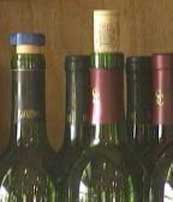
Fire Hits Napa's Oakville Winery


An historic wine cellar at the Silver Oaks Cellars' Oakville, CA, winery was destroyed by fire Thursday. Damage to the 7,000-square-foot facility was estimated in the millions of dollars.

Although the main part of the winery sustained only minor smoke and heat damage, the historic part of the structure that had been used to store wine barrels, marketing materials, merchandise and maintenance equipment, was heavily damaged.

"The firefighters did an amazing job to keep it from going to the main structure," said Capt. John Lovie of the California Department of Forestry. "The owners told us their loss was in the millions."

Officials believe the fire began in a Dumpster. The federal Bureau of Alcohol, Tobacco, Firearms and Explosives is assisting in the investigation. It took several hours for about 50 firefighters to extinguish the blaze.

To Dowd's Spirits Notebook latest entry.
To Dowd's Wine Notebook latest entry.
To Dowd's Brews Notebook latest entry.
Back to Dowd's Bar Blog home page.
20060202

Wine And A Movie


French movie star Gerard Depardieu has played many roles -- soldier, cardinal, chef, secret agent, musketeer -- but it is possible the role of winemaker may rival all those parts for the sheer passion he throws into the job.

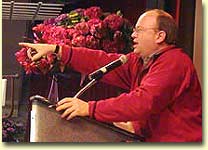
Depardieu was in Kiev, capital city of Ukraine, to meet with President Viktor Yushchenko and his wife, Katerina, at their country house (seen here). The first order of business was to seal a deal to work with a Ukranian film studio on "Taras Bulba," a movie project about a Cossack chieftain who fought the Poles to regain his homeland. (Yul Brynner and Tony Curtis co-starred in a 1962 film of the same name.)

But Depardieu, a fairly well-known winemaker back in France, made no secret of his interest in Ukraine's Crimean vineyards, according to MosNews.com, and said he had brought a group of experts with him. They want to assess the possibility of producing wine with Ukrainian grapes and French technology.

To Dowd's Spirits Notebook latest entry.
To Dowd's Wine Notebook latest entry.
To Dowd's Brews Notebook latest entry.
Back to Dowd's Bar Blog home page.